The best things to do in Porto start with six sights: walk the Dom Luís I Bridge, taste port wine in Vila Nova de Gaia, climb Clérigos Tower, admire the tile murals at São Bento Station, wander the Ribeira waterfront, and book Livraria Lello online ahead of time.
Before you build your list of things to do in Porto, Portugal, get your expectations straight. Porto is not Paris or Florence, and it does not try to be. A vocal group of visitors call it grey, moody, even a little rough around the edges, especially if they land here right after a trip to a brighter, glossier European city. That reaction says more about comparison than about Porto itself. Porto’s charm is quieter: worn granite, faded tile facades, and a river that changes mood with the light.
Here is the part almost no guide tells you upfront: Porto is hilly. Really hilly. The historic center is built on steep granite slopes, and the cobblestones (calçada) get slick fast, especially after rain. Pack shoes with real grip, not sandals or smooth-soled sneakers. Budget extra time between sights, because “close on the map” often means a steep climb in real life.
2026 US Traveler Briefing: Entry Rules, Safety & Tourist Taxes
Here is what actually changed for American travelers in 2026, and what did not.
Border rules. You do not need to apply for anything new right now. ETIAS, the EU’s planned $20-ish travel authorization for US citizens, was supposed to start in the last quarter of 2026. In July 2026, the EU quietly pulled that target date from its own website. Reports now point to a 2027 launch instead. So if you are traveling this year, skip it.
What did start is different. Since April 10, 2026, the EU’s Entry/Exit System (EES) has been live at Schengen borders. This means your fingerprints and photo get taken when you first arrive, similar to what happens at US airports for foreign visitors. It can add time at passport control, so build in a buffer. None of this changes your actual stay limit: US citizens can still visit for up to 90 days in any 180-day period, visa-free. Just make sure your passport has at least 3 months of validity left after your planned departure date.
Safety. Portugal sits at Level 1, “Exercise Normal Precautions,” the lowest advisory level the US State Department hands out. That has not changed. You may also see a “Worldwide Caution” notice from the State Department. That is a general alert covering the whole world, not a warning specific to Portugal. The real, everyday risk here is pickpocketing, mostly on crowded trams and along busy riverfront areas. Watch your bag, not the news.
Tourist tax. Porto charges a municipal tourist tax of €3 per person, per night, for guests 13 and older (a few sources say 12). It caps at €21, so anything past 7 nights is free. Airbnb collects it automatically. Kids under the age cutoff, travelers with a disability rated 60% or higher, and pilgrims on their first night are usually exempt.
Top 10 Things to Do in Porto, Portugal: The Waterfront & Bridges
Any real list of the top 10 things to do in Porto, Portugal has to start along the river. This is where the city shows its history and its everyday life at the same time.
Wander the Ribeira Waterfront District
Ribeira is Porto’s old riverside neighborhood, and UNESCO added it to its World Heritage list for good reason. Tall, narrow houses in faded yellow, red, and blue lean over cobbled lanes that open onto the river. You will see rabelo boats, the flat wooden boats once used to haul port wine barrels down the Douro, tied up along the water.
Cafes right on the waterfront know they have a view to sell, and prices reflect that. Walk one or two streets back from the river for a coffee or snack at local prices, then return to the water’s edge to look at the boats.
- Cost: Free to walk around
- Time needed: 1 to 2 hours
- Pro tip: Go in the early morning or right before sunset. Midday brings the biggest crowds and the highest café prices.
Walk Both Decks of the Dom Luís I Bridge
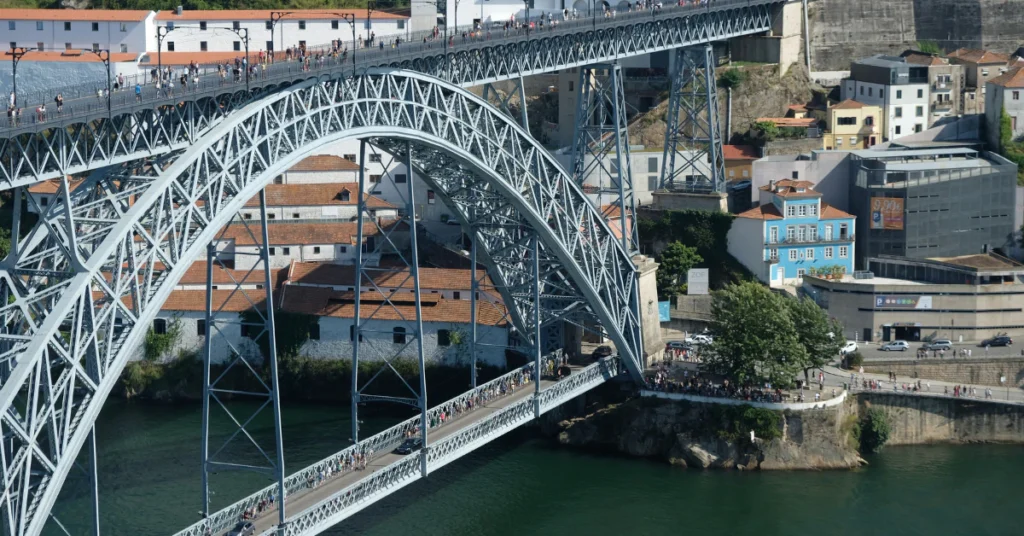
This iron bridge has two levels, and each one gives you a different experience. The lower deck carries cars and pedestrians and connects Ribeira directly to the port wine cellars in Vila Nova de Gaia. The upper deck is for the metro and for walkers, and it sits much higher, giving you a sweeping view down the river in both directions.
Both decks are free and open all day, every day.
- Cost: Free
- Time needed: 20 to 30 minutes to cross one deck
- Pro tip: Cross on the upper deck for the view, then come back on the lower deck to actually get down into Gaia’s wine cellars.
Take the Six Bridges Douro River Cruise
For a different angle on the city, book a Six Bridges cruise. These boats leave from the Ribeira docks near Cais da Estiva and take about 50 minutes to pass all six of Porto’s bridges, Dom Luís I included, before turning back.
- Cost: Roughly €20 to €23
- Time needed: 50 minutes
- Pro tip: Book the early afternoon departure if you want calmer water and better photos of the bridges.
Tour the Port Wine Cellars in Vila Nova de Gaia
Most cellars offer a short tour followed by a tasting. Book ahead online rather than walking up in the afternoon. Peak hours fill up fast, and showing up without a reservation often means waiting around or getting turned away entirely.
- Cost: Varies by cellar; check the individual cellar’s official site for current tour and tasting prices
- Time needed: 45 minutes to 1.5 hours
- Pro tip: Morning and early afternoon slots tend to book out first in high season, so reserve a day or two ahead if you can.
Catch Sunset at Jardim do Morro
Once you are done tasting, walk up to Jardim do Morro. The easiest route is straight across the upper deck of the Dom Luís I Bridge, though you can also take the metro or walk up from the Gaia riverfront if you would rather skip the climb. This small park sits above the cellars and gives you a clear, wide view of Porto’s terracotta rooftops turning orange as the sun drops.
It gets crowded here at golden hour, with locals and travelers packed onto the same benches and railings. Keep a hand on your bag, your phone, and any zippers. Crowded viewpoints like this one are exactly where pickpockets work.
- Cost: Free
- Time needed: 30 to 45 minutes
Climb Clérigos Tower (Torre dos Clérigos)
This bell tower is one of the tallest points in the old city, and the climb is not easy. Expect somewhere around 225 to 240 narrow spiral steps, depending on how you count them, with barely enough room to pass someone coming down. Wear shoes you can grip in, and go slowly if you get out of breath easily.
The reward at the top is a full view over Porto’s rooftops and the river beyond.
- Cost: About €10 for daytime entry, which covers the tower and the small museum
- Hours: Daily, 9:00 AM to 7:00 PM, last entry 30 minutes before close. Closed on January 1 and December 24, 25, and 31
- Pro tip: On select summer and holiday dates, a night ticket runs from 7:00 to 11:00 PM for around €5. It skips the museum but gets you the climb without the midday heat or the crowds.
Admire the Azulejo Murals at São Bento Train Station
Azulejos are Portugal’s painted ceramic tiles, and São Bento Station holds one of the best displays of them anywhere in the country. Step into the main hall and you will find roughly 20,000 hand-painted tiles covering the walls, telling scenes from Portuguese history through blue and white artwork. It is still a working train station, right in the center of downtown, and walking in costs nothing.
- Cost: Free
- Time needed: 15 to 20 minutes
Explore Porto Cathedral (Sé do Porto)
The cathedral, known locally as the Sé, sits on high ground above the old city. Walking into the main church nave is usually free, and daily Mass is held at 11:00 AM if you want to see it in use rather than just as a sight.
If you want more, a combined ticket for the cloister, museum, and tower runs roughly €3 to €4. Prices shift a little between booking sites, so check the current rate before you go.
- Cost: Free for the nave; about €3 to €4 for the cloister, museum, and tower bundle
- Time needed: 30 to 45 minutes
Livraria Lello
This bookstore is famous for its carved wooden staircase and stained glass ceiling, and that fame comes with a real cost: lines. Past visitors report waits from 30 minutes up to 3 hours, and once you get inside, the space is small and packed shoulder to shoulder. Buy a timed ticket online before you go. Do not just show up.
Here is where it gets confusing. Different travel sites quote wildly different prices for the standard “Silver” ticket, anywhere from €5 to €12 depending on where you look and how old the article is. The priority “Gold” ticket, which lets you skip the main line, is more consistently listed at €15.95. Rather than trust any single number here, including this one, check the official site at livrarialello.pt right before you book. Prices change, and this is one attraction where guessing wrong means standing in the wrong line.
One thing is confirmed directly from Lello’s own FAQ: your full ticket fee counts toward buying a book inside, so you are not really paying an entry fee at all if you walk out with something from the shelves. Kids age 3 and under get in free with proof of age.
- Hours: Daily, 9:00 AM to 7:30 PM. Closed January 1, Easter Sunday, May 1, June 24, and December 25
- Pro tip: Book your slot for right at opening. The crowds build fast after mid-morning.
Tour the Palácio da Bolsa
This grand 19th-century palace only lets you inside as part of a guided tour, and those tours run about 30 minutes. You cannot buy tickets online ahead of time here. You have to buy them on-site, so build a little wait time into your plan.
- Cost: Roughly €10 to €12 for adults, though this shifts a bit by source, so confirm the price when you arrive
- Time needed: About 30 minutes for the tour
- Pro tip: Arrive earlier in the day since tour slots can fill up and there is no way to reserve one in advance.
Eating Your Way Through Porto: Markets, Pastéis de Nata & The “Couvert” Trap

Start with the Mercado do Bolhão if you want a real taste of daily life in Porto. It reopened in September 2022 after a restoration that cost around €26 million and took years to finish. Now it holds 81 market stalls, 38 shops, and 10 restaurants, all under one roof, with a direct underground link to the Bolhão metro station. Walk through for fresh produce, seafood, and quick bites without ever leaving the building.
Next, let’s talk about pastéis de nata, the custard tarts you see in every bakery window. Here is the honest truth most guides skip: this tart is not actually from Porto. Monks at the Jerónimos Monastery in Belém, a neighborhood in Lisbon, created the recipe, and it has been sold commercially since 1837. Porto did not invent it, but the city does it well. Two solid spots to try one are Manteigaria, a beloved bakery that started in Lisbon and now has a busy outpost in central Porto, and Castro – Atelier de Pastéis de Nata, a workshop that was actually born in Porto itself.
A warning about the “couvert.”
If you sit down at a restaurant and the waiter brings bread, olives, or a small dish of cheese to your table without you asking for it, do not assume it is free. In Portugal, this is called the couvert, and it is a real, billable charge. Depending on the place, it can run anywhere from €1 to €12 or more per person, just for those small starter bites.
This trips up a lot of Americans, since bread baskets back home are usually complimentary. In Portugal, they are not. If you don’t want to pay for it, simply tell the waiter to take it away before you touch anything. No hard feelings, no awkwardness. It happens all the time, and staff are used to the request.
Unusual Things to Do in Porto (And Tourist Traps to Rethink)

If you want unusual things to do in Porto that skip the standard checklist, start further out from the center.
The Livraria Lello Foundation, housed at the Leça do Balio Monastery, is a National Monument sitting well outside the busy downtown crowds. Lello sells a combo ticket that includes entry here alongside the bookstore itself. It is a real trip out, so weigh it against how much time you actually have left in your schedule. If you already feel rushed, skip it. If you have a slower day planned, it is worth the distance.
Now, about Fado. Almost every Porto guide pushes a “dinner and Fado show” as a must-do cultural night out. Here is what they don’t tell you: Fado did not come from Porto at all. It grew out of early-19th-century Lisbon, in neighborhoods like Alfama, Bairro Alto, Mouraria, and Madragoa. That is its real home.
Because of that, most Fado dinners you find in Porto are built for tourists, not locals. Expect a set menu, a staged performance, and a price tag to match. If you still want to hear live Fado while you are in Porto, skip the generic packages and look instead for Casa da Mariquinhas, Casa da Guitarra, or Fado na Baixa. These three are the names locals actually point to.
One more thing to watch for: souvenirs. Those painted azulejo tile magnets, Barcelos roosters, and cork bags lining downtown shop windows look Portuguese, but a lot of them are mass-produced imports made somewhere else entirely. Flip the item over and check the tag before you buy. If you want something real, look for shops that name the actual maker or workshop behind the piece.
Things to Do in Porto for Young Adults: Nightlife, Sunset Spots & Coast

If you are traveling with friends or solo and want more energy than a quiet church visit, Porto has plenty to offer, mostly for cheap.
Start your day out at Foz do Douro, where the river meets the Atlantic Ocean. It has a totally different feel from downtown: wide promenades, beachside cafes, and open ocean air. Spend an afternoon walking the coast here before heading back into the city center.
As evening rolls in, grab a drink and head up to Jardim do Morro. This is where a younger, mixed crowd gathers to watch the sunset together, sitting on the grass or leaning on the railing with the whole city glowing behind them. It is free, social, and one of the best low-key hangouts in Porto.
Once the sun is down, cross back into central Porto for the late-night bar scene, or time your evening around the Clérigos by Night ticket. On select summer and holiday dates, the tower stays open from 7:00 to 11:00 PM for about €5, giving you the same climb but with the whole city lit up below.
One important legal note before you plan a big night out: despite what you may have heard online, marijuana, cannabis, and CBD products are not legal for tourists in Portugal. Getting caught with any of it can mean fines between €1,000 and €10,000, or even arrest. Do not let internet rumors about “relaxed” Portuguese drug laws lead you into real trouble.
How Many Days in Porto? 1-Day, 3-Day & 4-Day Mapped Itineraries

There is no single right answer here, but based on how these sights actually sit on the map, here is a practical way to split your time.
Things to do in Porto for a day
If you only have one day, group your stops by elevation so you are not climbing the same hill twice. Start your morning at São Bento Station and the Sé Cathedral, both close together, then head to your pre-booked slots at Livraria Lello and Clérigos Tower. In the afternoon, drop down into Ribeira and hop on the 50-minute Six Bridges Cruise. As evening comes, cross the upper deck of the Dom Luís I Bridge into Vila Nova de Gaia for a port wine tasting, then finish at Jardim do Morro for sunset.
What to do in Porto for 3 days
With three days, you can slow down and actually enjoy each stop instead of rushing.
- Day 1: Stay in the historic center. Cover São Bento, the Sé, Livraria Lello, Clérigos Tower, and Mercado do Bolhão for lunch.
- Day 2: Head toward the water. Visit Palácio da Bolsa, take the Six Bridges Cruise, then cross into Gaia for a cellar tour and Jardim do Morro at sunset.
- Day 3: Ease off the pace. Grab a pastel de nata at Castro or Manteigaria, spend the afternoon at Foz do Douro on the coast, and book an evening at Casa da Mariquinhas or Casa da Guitarra for real Fado.
What to do in Porto for 4 days
Follow the same 3-day plan above, then use your fourth day for something further out. Either book a full-day trip into the Douro Valley wine region, or head to the Livraria Lello Foundation at Leça do Balio Monastery if you would rather stay closer and go deeper into Porto’s literary side.
Whatever pace you choose, pair uphill sights together and downhill sights together. Your legs will thank you by day two.
2026 Comparison Tables & Essential Do’s and Don’ts for Americans
2026 Porto Attraction Cheat Sheet
| Attraction | Cost | Time Needed | Booking Rule |
| Livraria Lello | Price varies by source; check official site before booking | 20 to 30 minutes | Book online in advance |
| Clérigos Tower | About €10 daytime; about €5 seasonal night ticket | 30 to 45 minutes | Book ahead in peak season |
| Palácio da Bolsa | Roughly €10 to €12 | About 30 minutes | On-site only, no online booking |
| Sé Cathedral | Nave is free; cloister add-on about €3 to €4 | 30 to 45 minutes | Walk-in, no booking needed |
| Six Bridges Cruise | About €20 to €23 | 50 minutes | Book ahead in peak season |
Porto vs. Lisbon Quick Comparison
| Category | Porto | Lisbon |
| Vibe and scale | Smaller, quieter, riverside city | Larger, sunnier, spread-out capital |
| Getting around | Very walkable on foot | More reliant on trams and metro |
| Tourist tax | €3 per person, per night | €4 per person, per night |
| Signature culture | Port wine and river life | Fado music and pastéis de nata |
Do’s and Don’ts for American Travelers
- Do tell taxi drivers to “ligar taxímetro” (turn on the meter) instead of accepting a flat rate.
- Do tip 5 to 10 percent or just round up the bill. Skip it entirely if a service charge is already added.
- Don’t pack pepper spray, cannabis, or CBD products. All three are illegal for visitors here.
- Do carry some cash, since small cafes don’t always take foreign cards.
- Do dress modestly inside churches.
- Do wait to be seated at restaurants instead of picking your own table.
Frequently Asked Questions
What should I not miss in Porto?
Six things come up again and again as the real must-sees: the Ribeira waterfront, walking the Dom Luís I Bridge, a port wine cellar visit in Vila Nova de Gaia, the climb up Clérigos Tower, the tiled hall at São Bento Station, and Livraria Lello, booked ahead of time so you skip the worst of the line.
Are 3 days in Porto enough?
Yes, for most travelers. Two to three days is enough to comfortably cover the compact historic core plus a wine cellar tour across the river. If you want to add a day trip into the Douro Valley wine region, plan for a fourth day.
Which is nicer, Porto or Lisbon?
This really comes down to what you want. Lisbon is bigger, sunnier, and has stronger public transit, plus easy day trips to places like Sintra and Cascais. Porto is smaller and moodier, easier to explore on foot once you accept the hills, and built around Douro wine culture instead of a capital city buzz.
Why do so many Americans go to Porto?
The numbers back up the trend. Over 1 million US tourists visited Portugal in just the first half of 2024, nearly double the same period in 2022. Americans also took 22.4% of Portugal’s Digital Nomad Visas in 2023, and Golden Visa applications from US citizens jumped 162.5% year over year. Safety, English fluency, walkability, and lower costs than Lisbon all play a part.
Is English widely spoken in Porto?
Yes. Portugal ranks 6th out of 123 countries on the 2025 EF English Proficiency Index, landing in the “very high” band, and Porto has ranked among the top cities nationally for English. Hospitality staff, transit signage, and most residents under 40 speak it comfortably.
Is Portugal still welcoming US citizens?
Yes. Americans can still enter visa-free for up to 90 days in any 180-day period. ETIAS, the planned travel authorization, has been delayed to 2027. The biometric Entry/Exit System, which scans fingerprints and photos at the border, has been running since April 10, 2026.
Is it safe for Americans to go to Portugal right now?
Yes. The US State Department rates Portugal at Level 1, its lowest advisory level. Pickpocketing in busy tourist areas is the main real concern. Don’t confuse this with the broader global Worldwide Caution notice, which applies everywhere, not just Portugal.
How do Portuguese feel about Americans?
It’s mixed. Some reporting points to rent hikes and housing pressure in Lisbon tied partly to foreign newcomers, Americans included. Other analysis notes Americans are actually a small share of Portugal’s foreign residents overall. Day-to-day, tourist-facing hospitality in Porto stays warm and welcoming.
Conclusion
Porto rewards travelers who slow down and accept it on its own terms. Skip the tourist-trap fado dinner, book Livraria Lello ahead of time, and pace your hill climbs so you actually enjoy the views instead of dreading them. Whether you have one day or four, the core loop of Ribeira, the bridge, Gaia’s cellars, and the city’s tiled landmarks will give you the real Porto experience, without the overpriced extras.