Planning a trip to Iceland comes down to one question: what do you actually do once you land? The short answer is simple. A great Iceland trip blends three things: the Golden Circle route, the waterfalls and black sand beaches of the South Coast, and a look at the active Reykjanes volcanic zone, where lava has reshaped the land since 2021.
This guide gives you a full list of the top 20 things to do in Iceland, built around that mix. But it goes further than a simple checklist. You will find clear winter and December tips, current 2026 pricing for major attractions, and the hidden fees that catch first-time visitors off guard, like tourist taxes that often don’t show up until checkout.
Everything here is based on current, verified information, not old blog posts or guesswork. Let’s get into it.
The Top 20 Things to Do in Iceland
Iceland rewards visitors who plan by region. Most first-time trips combine four zones: the Golden Circle, the South Coast, Reykjavik itself, and one or two extras based on season, like the northern lights or a volcanic site. Here are the top 20 things to do, grouped so you can build a route instead of jumping around a map.
Golden Circle Route
The Golden Circle is a loop from Reykjavik that most visitors drive in a single day. It packs in three major stops plus one popular add-on.
- Þingvellir National Park. This is where the North American and Eurasian tectonic plates meet, and you can walk in the rift between them. It’s also a site of major historical importance in Iceland’s history.
- Geysir geothermal area. Home to Strokkur, an active geyser that shoots hot water into the air roughly every 5 to 10 minutes. You can stand close enough to feel the heat.
- Gullfoss waterfall. A powerful two-tiered waterfall that drops into a deep canyon. It’s one of the most photographed spots on the whole route.
- Kerið crater. A 6,500-year-old volcanic crater with a bright blue-green lake at the bottom. Entry costs around 400 ISK, and you can walk the full rim.
South Coast Waterfalls and Beaches
The South Coast is where Iceland’s water and rock put on the biggest show. Plan a full day here if you can.
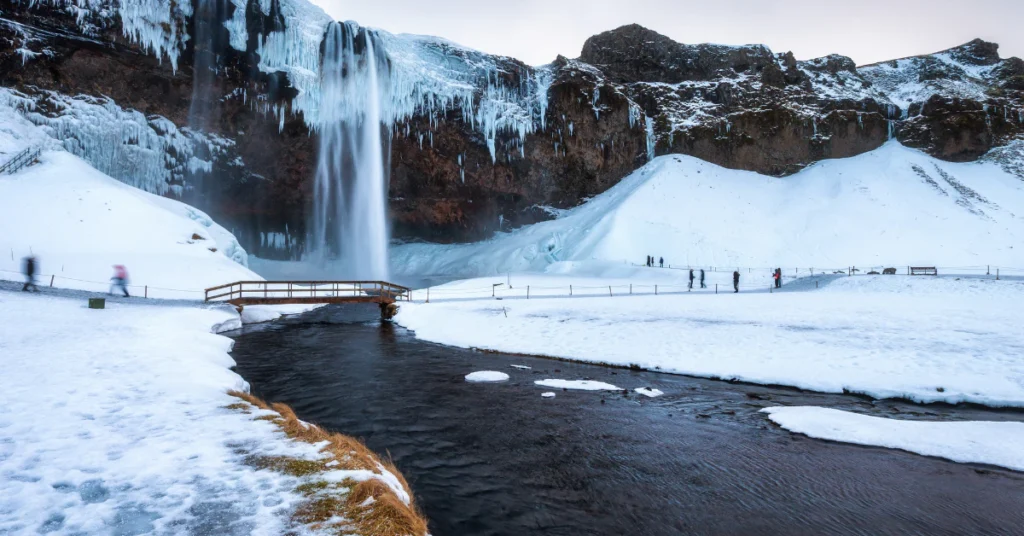
- Seljalandsfoss. A waterfall you can walk behind on a marked path. Bring a rain jacket. You will get wet.
- Skógafoss. A wide, powerful waterfall that drops straight down in a narrow canyon. It’s impressive both up close and from a distance.
- Reynisfjara black sand beach. Famous for its black volcanic sand and basalt columns. Stay well back from the waterline. Sneaker waves here have caused real injuries and deaths, and the undertow is dangerous.
Reykjavik City Highlights
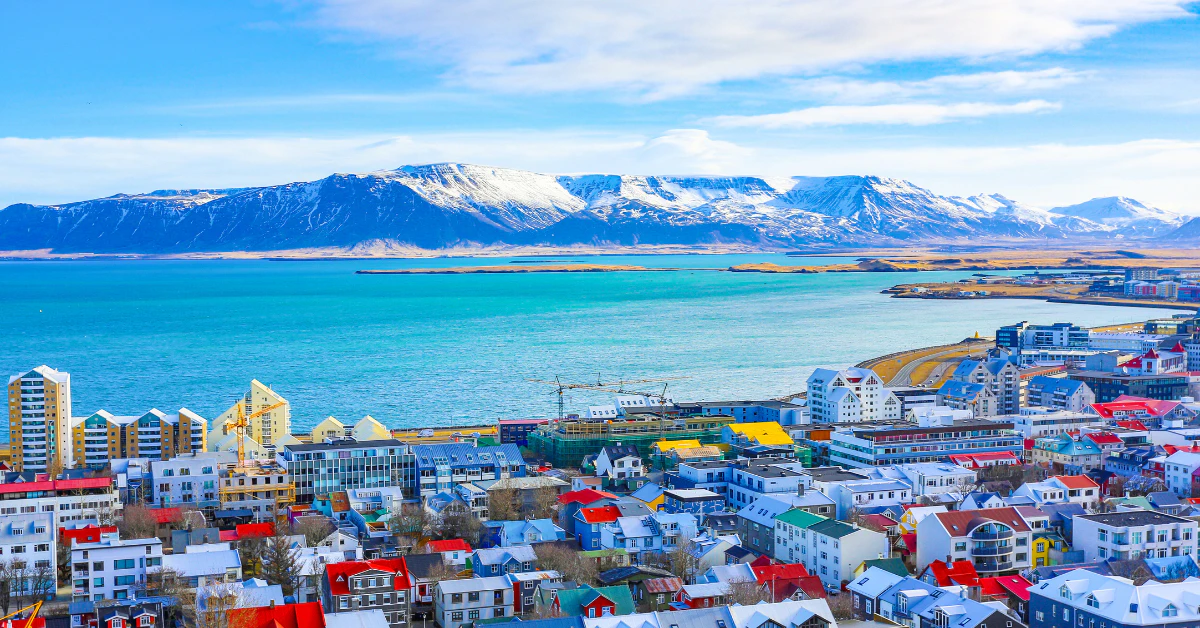
If you’re searching for things to do in Iceland Reykjavik specifically, the city center is compact and walkable.
- Hallgrímskirkja. Iceland’s tallest church, visible from most of the city. Pay a small fee to ride the elevator up for panoramic views over Reykjavik’s rooftops.
- Laugavegur. The main shopping and dining street downtown. It’s full of independent boutiques, cafes, and bars, with almost no international chain stores.
- Reykjavik’s old harbor and general city wandering. Many visitors base themselves near downtown, at places like the Reykjavik Saga Hotel, so they can walk to the harbor, Laugavegur, and Hallgrímskirkja without needing a car for the day.
Geothermal Spas
Soaking in a hot spring is a near-mandatory part of an Iceland trip, but prices and booking rules vary a lot between spas.
- Blue Lagoon. Iceland’s most famous spa, with milky-blue geothermal water. For 2026, pricing starts at 11,990 ISK for the Comfort package and runs up to about 79,000 ISK for the Retreat Spa tier. Entry is by timed booking only, and you should book your slot 4 to 6 weeks ahead if you’re traveling in summer. Walking in without a reservation is not a reliable option.
- Secret Lagoon. A smaller, simpler hot spring on the Golden Circle route. It’s a lower-cost alternative if the Blue Lagoon’s price tag doesn’t fit your budget.
- Laugarvatn Fontana. Another Golden Circle geothermal spa, with saunas and warm pools looking out over the countryside. Good for a relaxing stop between Þingvellir and Gullfoss.
Southeast Iceland
- Jökulsárlón Glacier Lagoon and Diamond Beach. A glacial lagoon filled with floating icebergs, right next to a black sand beach where chunks of ice wash up and glitter like diamonds. This is farther east than the Golden Circle or South Coast, so it needs extra driving time or an overnight stay nearby.
West Iceland
- Snæfellsnes Peninsula. Often called “Iceland in miniature” because it packs in coastal cliffs, black beaches, lava fields, and small fishing villages in one compact area. It gets far less attention than the Golden Circle, but it rewards travelers who have an extra day or two.
Wildlife
- Puffin watching, especially near the Westman Islands. Puffins nest in Iceland during the warmer summer months. The Westman Islands are known for one of the largest puffin colonies in the country.
Volcanic Iceland
- Visit the Reykjanes volcanic zone. This is Iceland’s most current and talked-about attraction. The peninsula has had more than 10 eruptions since 2021, and while there’s no eruption happening right now, the area remains one of the most active volcanic zones on Earth. Guided tours can take you to see recent lava fields safely. Flights, the Ring Road, and Keflavík Airport all continue to run normally during and between eruptions.
Northern Lights
- Northern lights hunting. If you’re chasing the aurora, timing matters more than luck. The viewing season runs from late September through early April, since Iceland’s summer nights stay too bright to see anything. Solar Cycle 25 remains near its peak through 2026, so displays are stronger and more frequent than an average year. Look for a Kp index of 3 or higher for a good chance at a visible show, and plan to be out between 9 p.m. and 2 a.m., since that window sees the most activity.
Shopping and Local Life
- Browse Kolaportið flea market or the Hand Knitting Association of Iceland. These are two solid, reliable spots for authentic souvenirs, from wool sweaters to secondhand books, rather than mass-produced trinkets.
Road Trips
- Drive a piece of the Ring Road. You don’t need to circle the whole country to get the benefit. Even a short stretch shows off Iceland’s shifting landscape, from lava fields to open plains to distant glaciers, all in the same afternoon.
Things to Do in Iceland in November & December
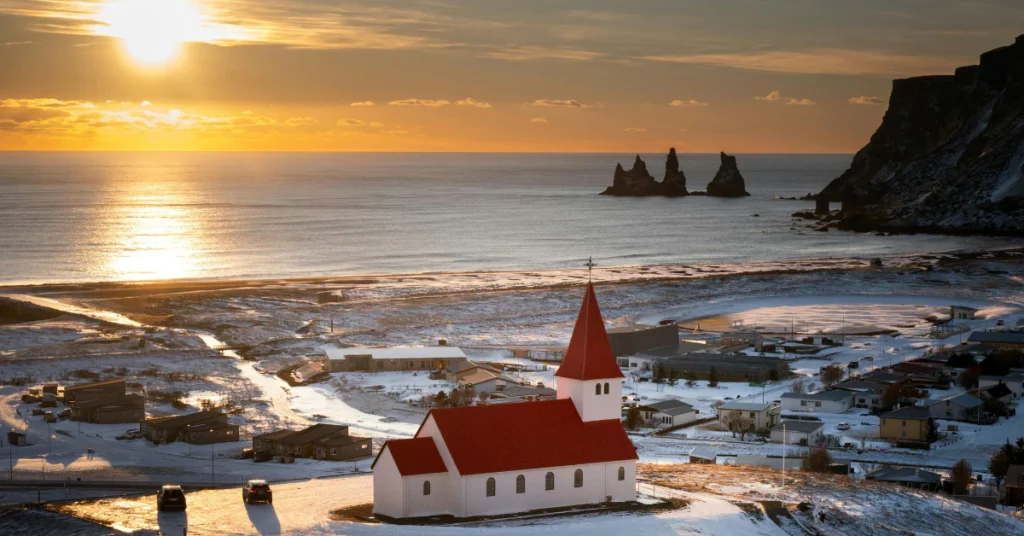
Winter changes the plan, but it doesn’t shrink it. If you’re looking at things to do in Iceland in November, expect long, dark nights, colder weather, and fewer crowds than summer. December adds a festive layer on top of that, with Christmas lights and holiday traditions running through the whole month.
One rule matters more than any sightseeing tip: F-roads are legally closed to all vehicles in winter. These are the gravel routes that lead into Iceland’s highlands, and they simply aren’t open once the season turns. Driving on them anyway is illegal, dangerous, and it voids your rental car insurance completely. Stick to paved, marked routes like the Ring Road and the Golden Circle, and check road conditions before you head out in bad weather.
The upside of the dark is obvious: this is prime time for the northern lights, since both November and December fall inside the late-September-to-early-April viewing window.
December brings something no other month has. Starting on December 11th or 12th, Iceland’s 13 Yule Lads begin arriving, one per night, leaving small gifts (or a rotten potato, if you’ve been naughty) for children in the lead-up to Christmas. It’s a fun, low-effort thing to look out for if you’re in Reykjavik with family, or even just curious about local folklore.
If you’re around for New Year’s Eve, plan for one of the loudest nights in the country. Icelanders buy huge amounts of fireworks and set them off all at once as the year turns. These fireworks are sold only by Iceland’s Search and Rescue association, and all the proceeds go directly to funding their volunteer rescue teams. It’s worth knowing this detail, since it explains why the show is such a big deal locally and not just a tourist spectacle.
Between the Yule Lads, the fireworks, and the dark skies built for aurora hunting, things to do in Iceland in December lean festive and slower-paced compared to a packed summer road trip. Just build your plan around paved roads, shorter daylight windows, and a realistic amount of driving time between stops.
Exploring the Reykjanes Volcanoes Safely
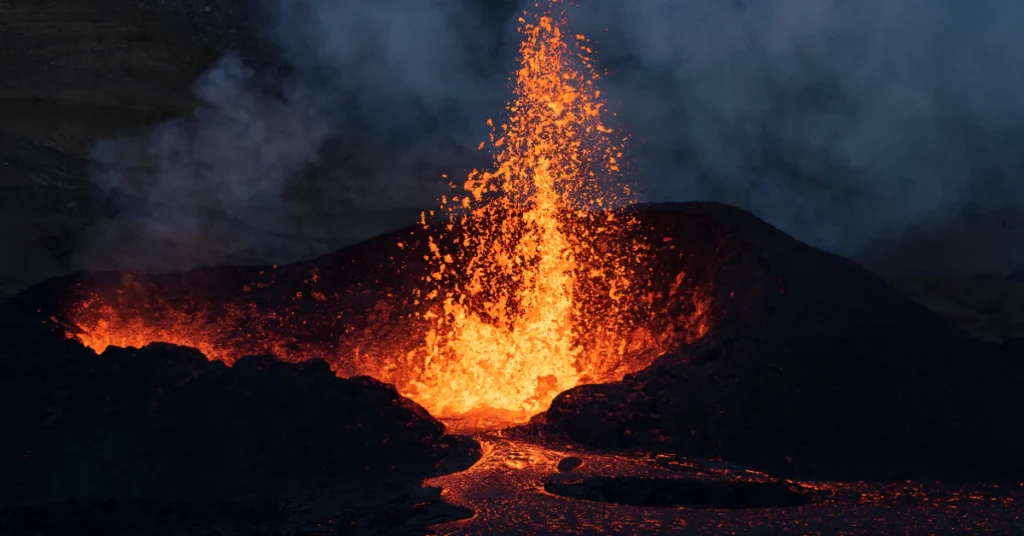
If you’re researching things to do in Iceland volcano related, here’s the current picture. As of September 2026, there is no eruption underway on the Reykjanes Peninsula. The last one ran from July 16 to August 5, 2025, and the area has been quiet since.
That doesn’t mean the volcanic story is over. Reykjanes has seen more than 10 eruptions since the region woke up after roughly 800 years of dormancy in 2021. Scientists consider this an active, ongoing volcanic cycle, not a one-time event. Another eruption could happen in the future, but that’s part of normal life in this part of Iceland, not a reason to change your travel plans.
For visitors, the practical takeaway is simple: everything runs on schedule. Keflavík Airport operates normally, the Ring Road stays open, and guided tours to see lava fields and past eruption sites continue to run as planned. None of this shuts down between eruptions.
If you want to see the volcanic zone up close, book a guided tour rather than trying to explore on your own. Guides know current access rules, safe viewing distances, and which lava fields are open to visitors that week. This is the safest way to actually stand near a lava field instead of just reading about one, and it means you get an accurate, up-to-date picture instead of relying on outdated information from before the current eruption cycle began.
2026 Tourist Taxes and Hidden Costs to Watch For

Iceland isn’t cheap, and a few 2026 fee changes make it worth doing the math before you book. Here’s what actually adds to your bill.
Accommodation tax. Hotels and guesthouses now charge 800 ISK per night, up from the previous 600 ISK rate. On top of that, an 11% VAT applies to lodging costs. Neither of these is always shown in the price you see when you first search for a room. Many booking platforms add both charges separately at check-in or checkout instead of folding them into the listed rate. Over a 7-night stay, that can mean roughly $40 in extra costs you didn’t plan for.
A new road tax for rental cars. Iceland is phasing in a usage-based road tax that applies to all vehicles, with full implementation expected by 2026. If you’re renting a car for a Ring Road trip, this is a cost to factor in alongside fuel and the rental fee itself, since it’s charged based on how much you actually drive.
A possible new attraction fee. Iceland’s government is currently reviewing a proposal to charge visitors directly at state-owned natural attractions. The goal is to spread tourists more evenly across the country, and the plan is expected to generate significant new revenue for the state. This hasn’t been finalized yet, so treat it as something to watch for rather than a confirmed cost, and check current rates before you travel.
The simplest way to protect your budget: build in a buffer of $50 to $100 above your planned accommodation costs, and don’t assume the first price you see online is the final one.
Frequently Asked Questions
What should I not miss in Iceland?
Focus on the core mix: the Golden Circle (Þingvellir, Geysir, Gullfoss), the South Coast waterfalls (Seljalandsfoss and Skógafoss), and at least a walk through downtown Reykjavik, including Hallgrímskirkja and Laugavegur. If your timing lines up, add the northern lights in winter or a visit to the Reykjanes volcanic zone, since both are genuinely current, active parts of what makes Iceland worth the trip right now.
Should I bring toilet paper to Iceland?
Not for hotels, restaurants, or cities. Iceland has normal plumbing and public toilets in populated areas. The real issue shows up on rural road trips and hikes, where toilets can be scarce between stops. One traveler report even noted a popular volcano trailhead that charged 1000 ISK for parking but had no toilet at the lot at all. The practical fix is simple: keep a small pack of wipes and a few ziplock bags in the car for situations without a nearby bathroom.
Is 3 days enough time in Iceland?
Opinion is genuinely split, and there’s no single right answer. Some travelers say 3 days is plenty to hit the Golden Circle, a stretch of the South Coast, and Reykjavik itself, especially on a stopover. Others insist Iceland deserves more time and that 3 days will leave you wanting to come back. Both are fair takes. If you only have 3 days, plan a tighter route and accept you’ll see the highlights, not everything.
Is it okay to wear jeans in Iceland?
Not for hiking, waterfalls, or any day with rain in the forecast. Wet jeans cling to your legs, stay cold, and take a long time to dry, which makes for a miserable day outdoors. Instead, dress in layers: a moisture-wicking base layer, an insulating mid-layer like fleece or wool, and a waterproof outer shell. Jeans are fine for walking around Reykjavik on a dry day, but leave them behind for anything more active.
What is a must buy in Iceland?
Three items come up again and again as genuine, well-regarded souvenirs. A lopapeysa, Iceland’s traditional wool sweater, is both practical and authentically Icelandic. Omnom chocolate is a well-known local brand worth picking up from a shop or supermarket. And Saltverk sea salt, made from Icelandic seawater and geothermal heat, is a small, easy-to-pack gift that reflects the country’s landscape in a way a generic souvenir doesn’t.
Conclusion
Iceland rewards travelers who plan around a few solid anchors: the Golden Circle, the South Coast, Reykjavik itself, and whatever the season adds, whether that’s the northern lights, the Yule Lads, or a safe look at the Reykjanes volcanic zone. The bigger challenge in 2026 isn’t finding things to do. It’s budgeting correctly, since accommodation taxes, VAT, and new road fees can quietly add to your total if you don’t check for them ahead of time. Build your route around paved roads in winter, book spa slots and flights early, and keep a small buffer in your budget for the fees that don’t always show up until checkout. Do that, and the rest of the trip takes care of itself.