Gas hit $4.48 a gallon in late September 2026, so the best road trip ideas now start with your time and your tank, not just the map. Got a weekend? Try a 2 to 3 day loop. A week? Aim for a coastal drive or one of America’s 27 UNESCO sites. Two weeks? Route 66 just turned 100. Traveling adults-only? Slow down and drive less.
How to Choose Your Trip Length, Pacing (The 3-3-3 Rule), and Planning Tools
Pick Your Duration Before Your Destination
Before you pick a place, pick a number of days. This one choice shapes everything else.
Got a 3-day weekend? Stay within a few hours of home. Long drives will eat up all your fun time.
Have a full week? Now you can drive further out. Try a coastal route or a trip built around one of the country’s national parks or historic sites.
Two weeks or more? This is bucket-list territory. Big cross-country routes, like Route 66, finally make sense with this much time.
Matching your trip to your real schedule (not your dream schedule) is the first step to a good trip.
Use the 3-3-3 Rule to Beat Driver Burnout
Many road trips fail for one simple reason. People try to do too much in one day.
The 3-3-3 rule fixes this. It is a simple guide used by experienced road trippers everywhere.
Here is how it works:
- Drive no more than 300 miles in one day.
- Arrive at your stop by 3 PM.
- Stay at least 3 nights before you move again.
This keeps you from driving until you are exhausted. It also gives you enough daylight to check in, relax, and actually enjoy the place you drove to.
If you are crossing big western states with wide open roads, you might switch to the 4-4-4 version. That means 400 miles a day, arriving by 4 PM, and staying 4 nights.
For a short, slow weekend trip, try the 2-2-2 rule instead. That is 200 miles a day, arriving by 2 PM, with 2 nights at each stop.
Best Road Trip Planner Apps and Booking Platforms
A good road trip planner takes the guesswork out of your route. It also helps you avoid the two biggest planning mistakes: doing zero research, or scheduling every single hour.
A few tools worth using:
- Roadtrippers: Maps your route and helps you find stops along the way.
- Google Maps (offline mode): Download your route before you go. Many national parks have no cell signal.
- AAA TripTik: A classic trip-mapping tool with gas prices built in.
- Furkot: Good for longer, multi-stop trips with lots of moving parts.
- Recreation.gov: Not optional if a park you’re visiting requires timed-entry permits. Always check this site before you leave.
Pick one planner, map your stops loosely, and leave room to change your mind along the way.
2026 Road Trip Budget Math: What $1,000, $2,500, and $5,000 Actually Buy
Why Old $150-Per-Day Budget Advice Fails in 2026
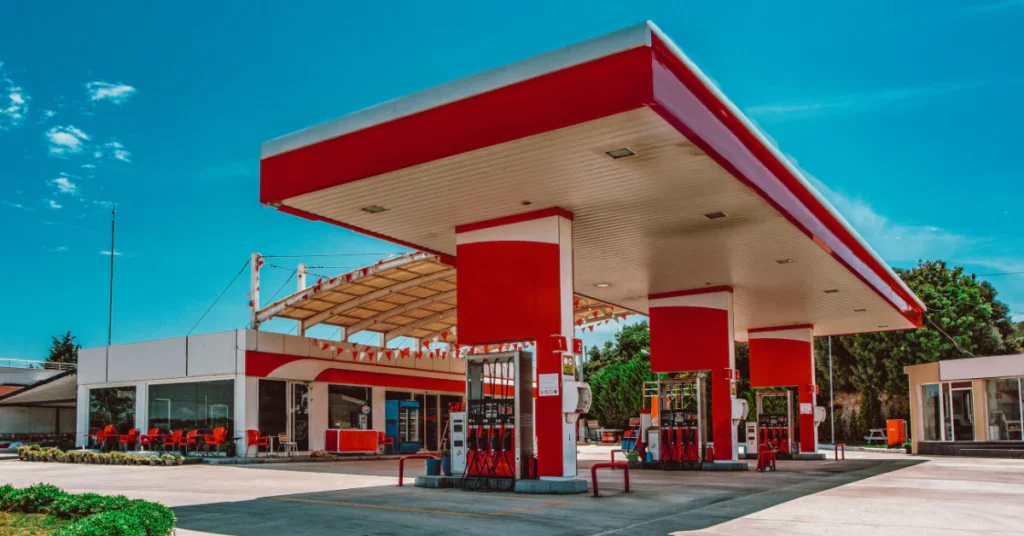
Older road trip advice often used a simple formula: $20 for snacks, $30 for gas, and $100 for a hotel room, adding up to $150 a day. That math does not hold up anymore.
Gas hit a national average of $4.48 a gallon in late September 2026. That is the highest it has ever been for this time of year. The whole month of September 2026 is averaging $4.30 a gallon, beating the old September record of $3.83, set back in 2023.
Where you drive changes your costs a lot. Gas is much cheaper in some states than others.
| Cheapest States | Price/Gallon | Most Expensive States | Price/Gallon |
| Texas | $3.95 | California | $5.87 to $6.34 |
| Indiana | $3.96 | Washington | ~$5.51 |
| Mississippi | $3.99 | Hawaii | ~$5.39 |
| Louisiana | $4.03 | ||
| South Carolina | $4.04 |
A 300-mile driving day (the daily cap under the 3-3-3 rule) costs a lot more in a car getting 25 miles per gallon if you’re filling up in California than if you’re filling up in Texas. That $30-a-day gas estimate from older articles simply does not stretch far enough at today’s prices.
2026 Road Trip Budget Comparison Table ($1,000 vs. $2,500 vs. $5,000)
Here is what each budget tier realistically buys in 2026, once you factor in current gas prices.
| Budget | Realistic Trip Length | Daily Mileage Cap | Lodging Style | Best States to Target |
| $1,000 | 3 to 5 days | Keep it low, closer to the 2-2-2 rule (200 miles/day) | Camping and cooking your own meals (about $4 per person, per meal) | Cheap-gas states like Texas, Indiana, Mississippi, Louisiana, South Carolina |
| $2,500 | 1 week | Standard 3-3-3 rule (300 miles/day) | Mix of camping and budget motels, some meals out | A mix of cheap and mid-priced gas states, avoid long stretches in California |
| $5,000 | 2 weeks or more | Standard 3-3-3 rule, with room for slower 4-4-4 stretches | Mostly hotels, more meals out | Any route, including pricier states like California, Washington, or Hawaii |
The lesson here is simple. Your dollars go further if you cook more meals, camp more nights, and plan your route through cheaper-gas states when you can. A $1,000 trip is still possible in 2026. It just means fewer miles, more camping, and a shorter trip than it used to buy.
2026 National Park Rules: Timed-Entry Reservations and New Fee Changes
Which Parks Dropped Timed-Entry Reservations in 2026 (And Which Kept Them)
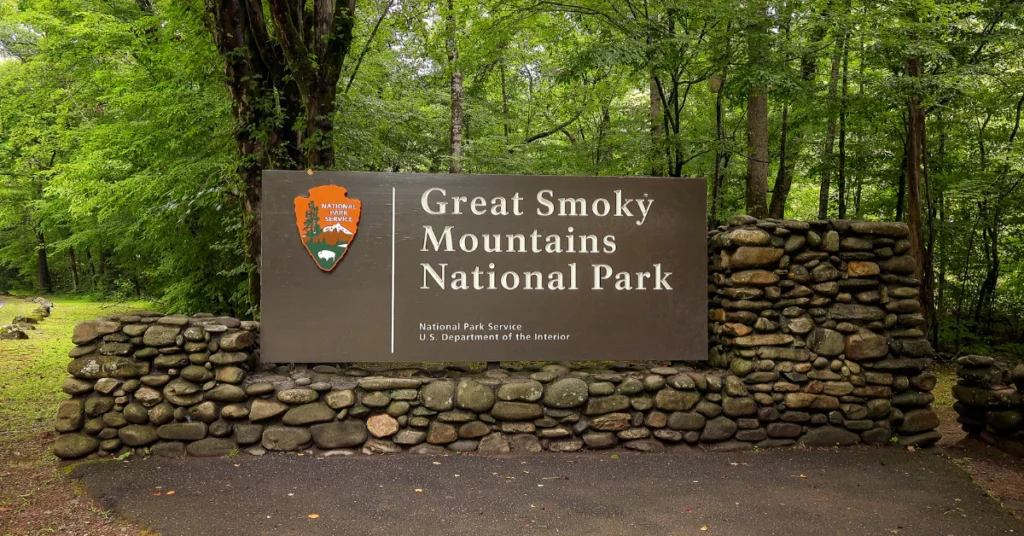
Good news if you like to plan less and drive more. Several major parks dropped their timed-entry reservation systems for 2026.
Yosemite National Park no longer requires a reservation to enter. Neither does Arches National Park. Glacier National Park also dropped its park-wide system, though it still manages traffic closely on Going-to-the-Sun Road.
Mount Rainier National Park is also skipping park-wide timed entry in 2026. This came after some back-and-forth in the news about whether the park would keep the system, so it is worth double-checking closer to your trip.
There is one big exception. Rocky Mountain National Park still requires a timed-entry permit. This runs from May 22 through October 18, 2026. Permits are released monthly, so you will need to book ahead on Recreation.gov.
New 2026 Entry Fees and Revised Fee-Free Days
Park fees changed on January 1, 2026, and the changes depend on where you live.
For U.S. residents, not much changed at the gate. The America the Beautiful annual pass still costs $80 and covers most national parks and federal recreation sites.
For international visitors, prices went up a lot. Starting this year, nonresidents pay an extra $100 per person at 11 major parks. These are Acadia, Bryce Canyon, Everglades, Glacier, Grand Canyon, Grand Teton, Rocky Mountain, Sequoia and Kings Canyon, Yellowstone, Yosemite, and Zion. The nonresident annual pass also jumped from $80 to $250.
Fee-free days changed too, and this affects everyone. In 2026, free entry days only apply to U.S. residents. Several old free days are gone, including MLK Day, Juneteenth, the Great American Outdoors Act anniversary, and National Public Lands Day.
In their place, the National Park Service added five new U.S.-resident-only free days:
- Presidents’ Day (Feb 16)
- NPS Birthday (Aug 25)
- Constitution Day (Sept 17)
- Theodore Roosevelt’s Birthday (Oct 27)
- Veterans Day (Nov 11)
If you used to plan a free park visit around MLK Day or Juneteenth, that will not work anymore. Check the NPS fee schedule before you go, so you are not surprised at the entrance gate.
Short Road Trip Ideas: Best 2-Day and 3-Day Weekend Getaways
Not every road trip needs a full week off work. Some of the best short road trip ideas fit into a single weekend.
The key is keeping your daily driving under 200 miles. That way, you spend your time exploring, not sitting in the car.
Here are three solid options for a 2 to 3 day trip.
Sedona and Grand Canyon Rim Loop (3 Days)
This Southwest loop packs in a lot of scenery for a short trip. Spend your first day or two exploring the red rocks around Sedona, Arizona. Then add a single day trip up to the rim of Grand Canyon National Park before heading home. It is a great pick if you want big views without a long drive.
Arches National Park Weekend (2 to 3 Days)
Utah’s Arches National Park is a great pick for a spontaneous weekend, and it just got easier to plan. Arches dropped its timed-entry reservation requirement for 2026, so you no longer need to book a slot weeks in advance. That makes it a good option if you decide on a Wednesday that you want to hit the road by Friday.
Low-Cost Southern Weekend Loops (2 to 3 Days)
If your goal is to keep your gas budget small, look south. As of late September 2026, Texas is averaging $3.95 a gallon, Louisiana is at $4.03, and South Carolina is at $4.04. All three are well below the national average of $4.48. A short coastal or bayou loop through one of these states stretches your weekend budget further than a trip through a pricier state like California or Washington.
Whichever loop you pick, remember the short-trip rule. Fewer miles, more stops. A 2 to 3 day trip should feel relaxed, not rushed.
Best 1 Week Road Trip USA Routes: East Coast Drives and UNESCO Stops
A full week opens up a lot of options, especially if you want to mix history, nature, and coastline into one trip. This is a great length for a 1 week road trip USA route, and the East Coast has plenty to offer.
Here is a fact worth knowing before you plan. The United States now has 27 confirmed UNESCO world heritage sites, spread across 23 states and 2 territories. That number is higher than what many older travel blogs still list, which is often 22 or 24. The newest addition is Okefenokee National Wildlife Refuge, added in 2026. It is also worth noting that the U.S. announced its third withdrawal from UNESCO in July 2026 and sat out this year’s session in Busan, South Korea. Even so, the 27 existing U.S. sites remain open and worth visiting.
The Southeast Heritage and Coastal Loop (7 Days)
Build this week-long trip around Okefenokee National Wildlife Refuge, which sits on the Georgia and Florida border. It is one of the newest and least-crowded UNESCO stops in the country. Pair your drive with a route through South Carolina, where gas is running about $4.04 a gallon, well under the national average. This keeps fuel costs down while you explore a mix of coastline and wetlands.
Classic New England and Acadia Coastal Drive (7 Days)
If you want a more classic East Coast road trip idea, head north instead. A week along the New England coast gives you small harbor towns, ocean views, and quiet highways. End your trip at Acadia National Park in Maine. Keep in mind that Acadia is one of the 11 parks now charging the new $100 nonresident fee for international visitors, on top of the regular entrance fee, so plan ahead if you are hosting guests from outside the country.
South Florida to Everglades National Park Drive (7 Days)
For a warmer week-long option, drive south through Florida’s coastal highways and finish at Everglades National Park. This park is both a UNESCO world heritage site and one of the 11 parks affected by the 2026 nonresident fee changes. It is a great pick if you want wetlands, wildlife, and warm weather without needing a passport-length vacation.
All three of these routes fit comfortably into a single week using the 3-3-3 pacing rule from earlier. Pick the one that matches your climate preference and your starting point, and you will get a real taste of America’s coastline and heritage sites without rushing.
Epic 2 Week Road Trip USA Itineraries: Route 66 Centennial and the West
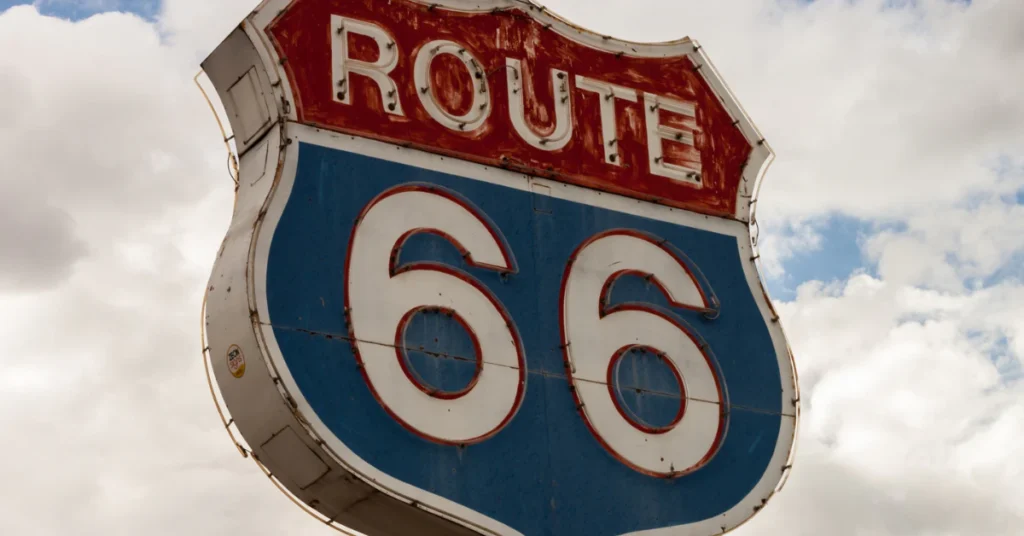
If you have two full weeks to spend, this is where the biggest bucket-list trips come in. A 2 week road trip USA route gives you enough time to actually slow down between stops, instead of racing from one to the next.
The Route 66 Centennial and UNESCO Heritage Detour (14 Days)
There is no better year than 2026 for this trip. Route 66 was established back in 1926, which makes 2026 its 100th birthday. The highway was officially decommissioned in 1985, but much of it is still drivable today, making it a perfect flagship route for this milestone year.
To make the trip even richer, add in some detours to nearby UNESCO world heritage sites. Start your drive in Illinois, where you can see early Frank Lloyd Wright buildings before you head west.
As you move through the Southwest, plan a detour to Mesa Verde National Park in Colorado. This was one of the very first two U.S. sites ever added to the UNESCO list, back in 1978. From there, work in nearby ancestral Puebloan heritage sites in New Mexico before continuing toward Grand Canyon National Park, which is also a UNESCO world heritage site in its own right.
Finish your route in California, where you can visit more Frank Lloyd Wright architecture near the end of the historic highway. This gives your Route 66 drive a real sense of history on top of the classic roadside charm.
The Grand Western National Parks Loop (14 Days)
If parks matter more to you than highway history, build your two weeks around a loop of major western parks instead.
Start with Rocky Mountain National Park. This is one of the only major parks still requiring a timed-entry permit in 2026, running from May 22 through October 18. Book this ahead of time on Recreation.gov, since spots are released monthly and can fill up.
From there, continue on to Arches National Park, which no longer needs a park-wide reservation this year. Depending on your route, add Yosemite National Park (also a UNESCO site) or Glacier National Park. Both of these also dropped their park-wide vehicle reservation systems for 2026, which makes stringing several parks together much simpler than in past years.
One thing to plan for on this western loop is fuel cost. Gas runs much higher out west than in many other parts of the country. California is currently running between $5.87 and $6.34 a gallon, and Washington is close behind at around $5.51. Build extra room into your budget if your route passes through either state, especially compared to the cheaper gas markets in the South.
Both of these two-week trips reward patience. Give yourself time at each stop, keep your daily driving in check, and let the history or the scenery do the rest of the work.
Curated Road Trip Ideas for Adults: Slower Pacing and Scenic Stops
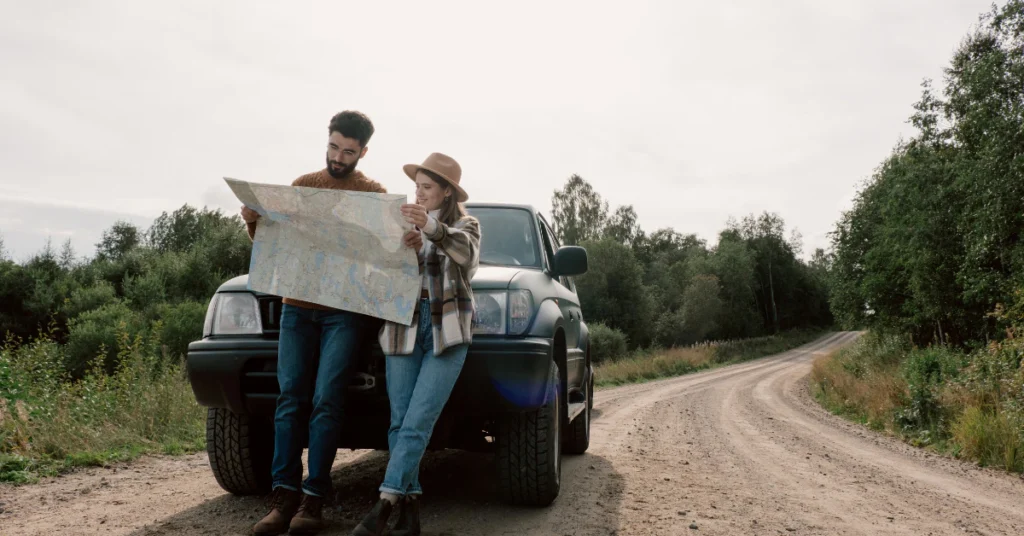
Not every road trip needs a minivan full of kids or an RV hookup. If you are traveling as a couple, solo, or with a group of adult friends, you can build a trip around a slower pace and simpler goals: good food, good views, and real time to relax.
For road trip ideas for adults, a standard car or SUV works just fine. Instead of packing every hour, follow a relaxed version of the 3-3-3 rule, or the even slower 2-2-2 rule. Arrive early, by 2 or 3 in the afternoon, and stay put for a few nights. That gives you time for a late lunch, a short trail, or just sitting still somewhere pretty, instead of rushing to the next stop.
Here are three routes built around that slower pace.
Sedona, Arizona and the High-Desert Southwest
Sedona is a strong pick for an adult-paced desert trip. The red rock scenery is worth slowing down for, and multi-night stays let you explore hiking trails without cramming everything into one rushed day. Keep your daily driving light here and let the desert set the pace.
Northern California to Yosemite National Park
This route pairs Northern California’s wine country with a scenic drive into Yosemite National Park. The good news for 2026 is that Yosemite no longer requires a park-wide timed-entry reservation, so this trip is easier to plan than it used to be. Just budget more for gas. California is currently running between $5.87 and $6.34 a gallon, well above the national average.
Pacific Northwest and Mount Rainier National Park
For a cooler, greener option, build a loop around the Seattle area and Mount Rainier National Park. Like Yosemite, Mount Rainier does not require a park-wide timed-entry system in 2026, which makes it simple to add to a relaxed itinerary. Spend your days moving between city stops and alpine views, without needing to book anything weeks in advance.
Each of these routes proves that a great road trip does not need a crowd or a camper. Sometimes fewer stops and more time in one place makes for the better trip.
Gas vs. EV Realities and Packing Rules to Avoid Burnout
Should you take a gas car or an EV? Even with gas prices high, EVs still bring their own headaches on long trips. NPR and Department of Energy data show that more than half of non-Tesla fast chargers in the U.S. are less than two years old, so the network is still new and uneven. Drivers report overcrowded or broken chargers, real range anxiety, and charging stops placed in dull mall parking lots instead of scenic spots. If you drive electric, build extra buffer time into your daily 300-mile cap for charging stops that do not go as planned.
The other trap has nothing to do with fuel type. It is overpacking. Experienced road-tripping parents have found that stuffing the car with extra gear, toys, and supplies causes more daily stress than forgetting one small item at home. A cluttered cabin makes every stop harder.
Keep your packing simple. Plan for a 3 day laundry cycle instead of packing for every possible outfit, and leave the backseat clear enough to actually see out the windows.
Frequently Asked Questions About Road Trip Ideas
What are some fun road trip ideas?
Some of the best road trip ideas for 2026 include a Route 66 centennial drive, a stop at Okefenokee National Wildlife Refuge (the newest U.S. UNESCO site), and a reservation-free park trip to Yosemite or Arches. East Coast drives, like a New England to Acadia route, are also a great pick this year.
What is the 3-3-3 rule for road trips?
The 3-3-3 rule is a simple pacing guide. Drive no more than 300 miles in one day, arrive at your stop by 3 PM, and stay at least 3 nights before moving on again. It helps prevent driver fatigue and keeps your trip from feeling rushed.
Is $1000 enough for a road trip?
It can be, but it is tighter than it used to be. The old rule of thumb was 150aday(20 snacks, $30 gas, $100 hotel), which stretched $1,000 into about a week. Camping and cooking $4-per-person meals can stretch it further. But with gas averaging $4.48 a gallon in late September 2026, you will need to limit your miles or stick to cheaper-gas states in the South to make $1,000 work.
Which place is best for a 3 day trip?
There is no single best answer here. It depends on where you are starting from. Look for a dense cluster of sights within a few hours of home, like Sedona and the Grand Canyon in the Southwest, or Arches National Park in Utah.
Where to go in the US for 3 days?
It depends on your style. Try an East Coast coastal drive, a national park loop that skips timed-entry permits (like Yosemite or Mount Rainier), or a low-gas-cost Southern loop through states like Louisiana or South Carolina.
Which place is good to visit for 2 days?
Pick a single home base under three hours from a major city or airport. Sedona, Arizona works well for this, and so does a stop at Okefenokee National Wildlife Refuge. That way, you spend your short weekend exploring instead of driving.
Final Thoughts: Building Your 2026 Road Trip
Choosing a road trip in 2026 comes down to three things: your time, your budget, and your pace. Start by picking your trip length first, then let that guide everything else.
Use the 3-3-3 rule to avoid burnout, whether you are driving a short weekend loop or a full two-week Route 66 centennial trip. Check gas prices in the states along your route, since the gap between $3.95 in Texas and $6.34 in California is big enough to change your whole budget.
Before you leave, check park reservation rules on Recreation.gov, especially for Rocky Mountain National Park, and note the new nonresident fees if you are hosting international guests. Pack light, plan loosely, and leave room to slow down.
The best road trip is not the one with the most stops. It is the one that fits your time, your budget, and your pace this year.