
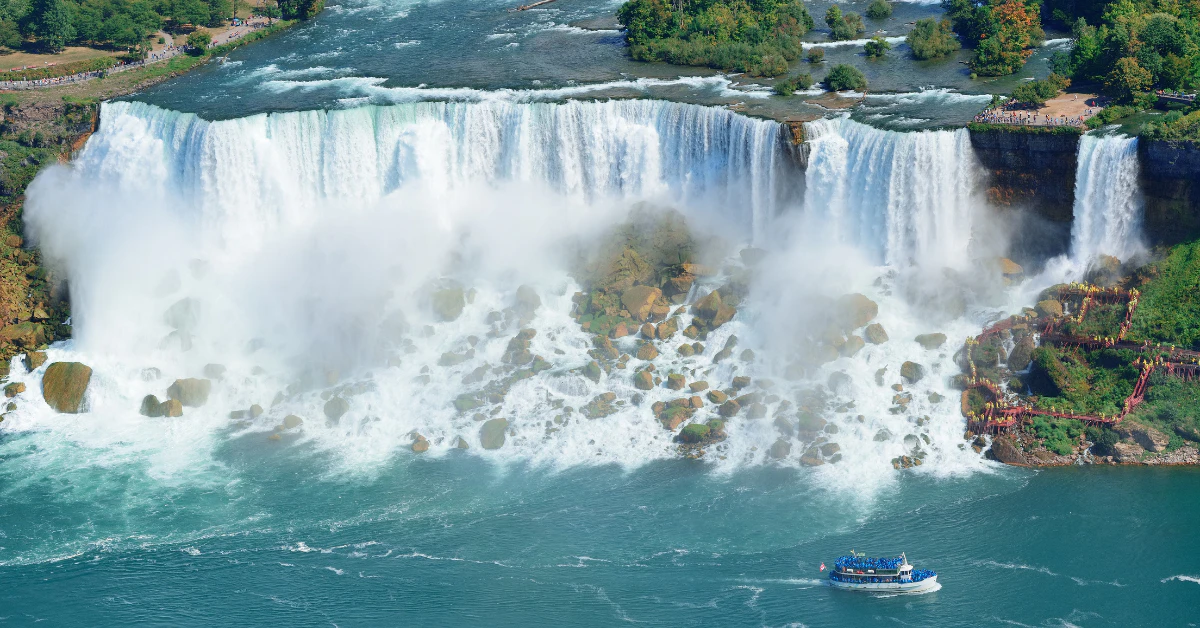
September is the best time to visit Niagara Falls. The summer crowds are gone, the weather is still warm, and every major attraction is open and running on full hours.
If you want the short version: go in September. If you want to know why, keep reading.
Summer brings huge crowds and long lines. Winter brings freezing temperatures and shorter hours at some spots. September gives you the best of both worlds. You get mild days, thinner crowds, and full access to boat tours and viewing decks.
There’s another reason 2026 could be an even better year to visit in September. In 2025, Niagara County saw a real drop in visitors. Canadian spending on the New York side fell 28%, and New York State lost about 176,000 visitors overall. That means 2026 travelers could see thinner crowds and softer prices than usual.
The Daily Strategy: Morning or Evening?
The best time of day depends on the month you visit. Niagara Falls attractions don’t run the same hours all year.
Take Maid of the Mist. It opens for the season on April 24, but only runs 9 AM to 5 PM through May 18. If you show up at 6 PM in early May hoping for a boat ride, you’ll be out of luck.
Want a full evening boat tour? You’ll need to visit between June 22 and August 9. That’s the only window when Maid of the Mist runs 9 AM to 8 PM.
For most of the year, mornings are your safest bet. Early visits mean cooler weather, fewer crowds, and attractions that are definitely open.
Evenings shine in one specific way: the falls light up after dark. If you’re chasing that view, check attraction hours for your exact travel dates first.
NY vs. Canada: Timing and Trade-offs
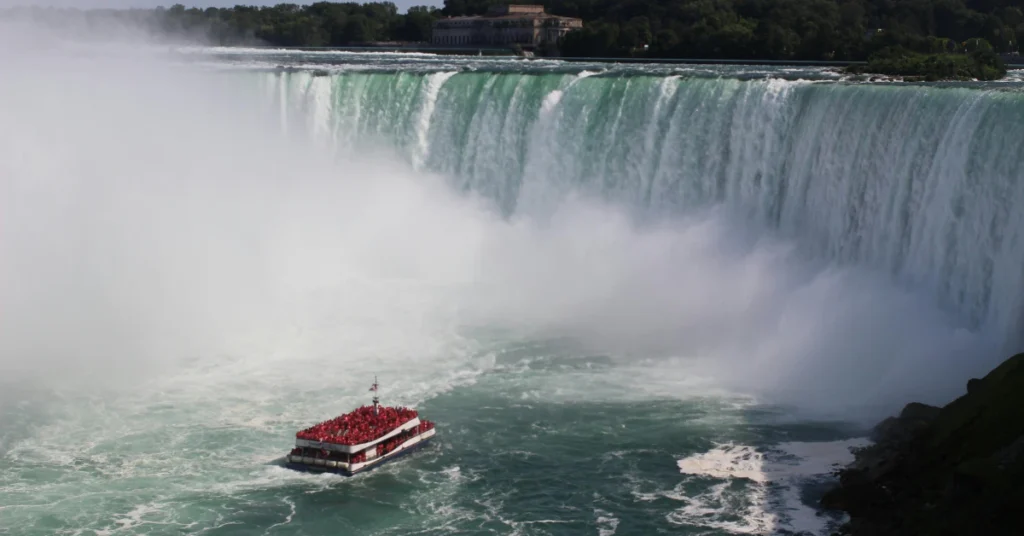
Picking a side of the border is one of the biggest decisions in planning this trip. Each side has a real trade-off.
Travelers on forums are blunt about it. The city of Niagara Falls, NY often gets called run down once you step outside the state park. The park itself is free and beautiful, but the surrounding streets don’t always match that beauty.
Canada tells a different story. The Canadian side is more built up, with more hotels, restaurants, and lights. But it comes with a catch. Canada adds about 13% tax (HST) to hotels, meals, and shopping. Parking near the falls is also paid, not free like some spots on the NY side.
The boat tours show this cost gap clearly:
| Boat Tour | Side | Adult Price |
| Maid of the Mist | USA (New York) | $30.25 USD |
| Hornblower Niagara City Cruises | Canada (Ontario) | $47.95 CAD (tax not included) |
That’s a real difference once you add Canada’s tax on top of the Hornblower price.
So how do you choose? If you want the better photo of Horseshoe Falls and more nightlife, pick Canada and budget for the tax. If you want a cheaper trip with a quieter, more natural setting, stay on the NY side.
The Shoulder Seasons: September & October
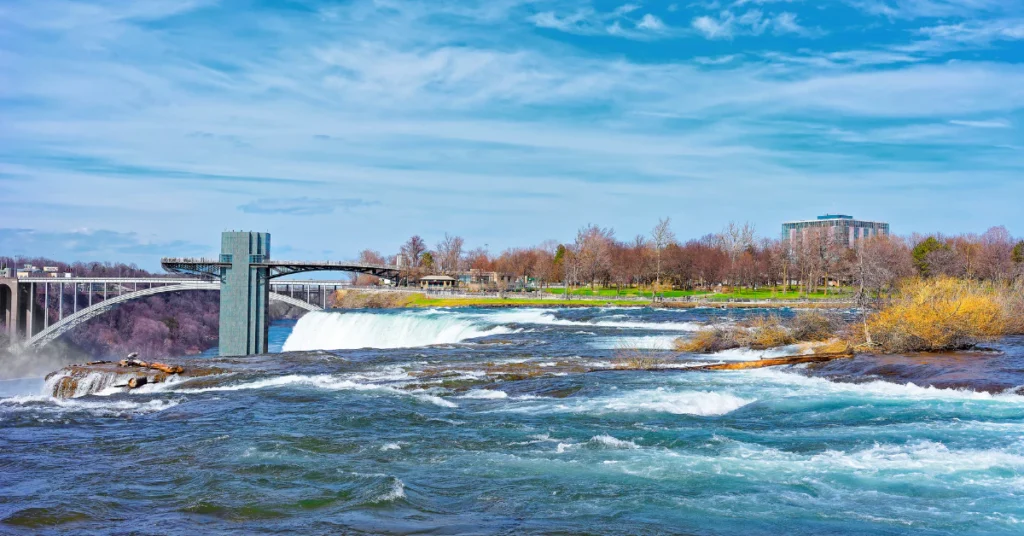
Fall is where Niagara Falls really shows off. The air turns crisp, the crowds thin out, and the gorge turns gold and red.
Mid-to-late October is the peak window for fall foliage in the Niagara Gorge. The maples and oaks along the cliffs turn bright orange, yellow, and deep red. It’s a different kind of beauty than the falls themselves, and it’s easy to catch both on the same trip.
The best part? You don’t have to choose between foliage and the boat tours. Maid of the Mist stays open through November 8, 2026. That means you can walk through peak fall color one day and still ride right into the mist of Horseshoe Falls the next.
September keeps more of summer’s daylight and warmth, while October leans cooler and more colorful. Both months skip the worst of the summer crowds and heat.
If you only get one shot at this trip, aim for late September through mid-October. You’ll get comfortable weather, open attractions, and some of the best scenery of the whole year.
Winter Travel & The “Dead Season” Myth

Winter at Niagara Falls isn’t the ghost town people think it is. One big myth needs to go first.
Cave of the Winds on the US side is now open all year. That’s a real change from how things used to work. The attraction used to close for winter, but it stays open now, rain, snow, or shine.
Winter pricing makes it an even better deal. From now through mid-May, and again starting October 19, Cave of the Winds drops to a flat $14 for adults and $10 for youth. Compare that to peak summer prices of $23 for adults and $19 for youth. That’s a big saving for the same experience.
What about March? It’s still cold. Expect heavy coats, gloves, and icy walkways. Don’t plan a March trip expecting spring weather. But the falls themselves stay just as powerful, and the crowds are thin.
Here’s the biggest myth to clear up: Niagara Falls does not freeze completely. Ice builds up along the edges and mist freezes onto the rocks and trees nearby, creating a stunning icy scene. But the river underneath keeps flowing all winter long. The falls never fully stop.
If you want a quiet, budget-friendly trip with dramatic ice scenery and no crowds, winter deserves a real look.
The Cheapest and Worst Times to Visit
Let’s not hedge on this one. July and August are the worst time to visit if you hate crowds. Expect long lines, packed parking lots, and peak hotel prices across both sides of the border.
One thing never changes though. Entry to Niagara Falls State Park is always free, no matter when you go. It’s the extras, hotels, boat tours, and attractions, that cost more during peak summer.
If you want the cheapest trip possible, aim for late November through March. Skip the holiday weeks around Christmas and New Year’s, since those get busy and pricier too. Outside of that, hotel rates drop and crowds thin out fast.
This pairs perfectly with the winter attraction pricing already covered. Cheaper hotels, cheaper tickets, and a free park entry all in the same window. That’s the real budget sweet spot.
Planning a Trip from Toronto
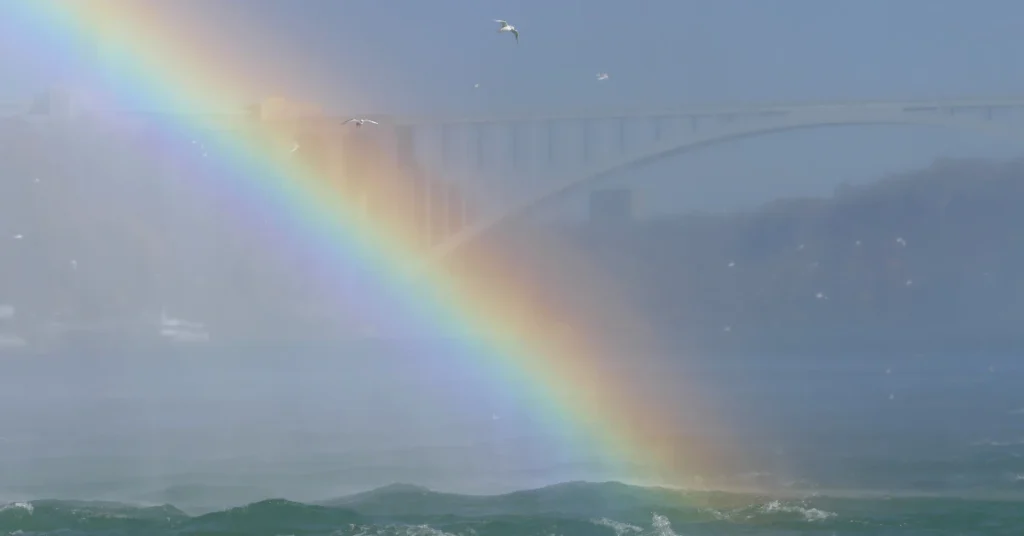
Coming from Toronto, you’ll likely base yourself on the Canadian side. But don’t skip the US side for the day. The view from New York is worth the short walk across.
Crossing the Rainbow Bridge on foot requires a passport, NEXUS card, or Enhanced Driver’s License. No exceptions.
The toll recently switched to a tap-based system. Expect to pay $1.25 CAD by tap, or exactly $1.00 USD if you’re paying with quarters. Bring the right change or a tap-enabled card before you walk up.
FAQ’s
How many days do you need at Niagara Falls?
Plan for 2 to 3 days. That’s enough time to see both sides without rushing. If you only have one day, you can still hit the highlights, but expect to move fast and skip some attractions.
Is there a lot of walking?
Yes, but it’s manageable. Most paths around the falls are flat and paved, with some stairs at specific spots like Cave of the Winds. If you want to save your legs, the Niagara Scenic Trolley on the US side loops between the main viewpoints and cuts down on walking a lot.
How many people fall over the falls each year?
This is a sensitive topic, but it comes up often. Estimates put the number at 20 to 25 deaths per year, and the vast majority of these are intentional, not accidental. Looking at official records since 1903, only 7 deaths have been classified as accidental falls. The falls are powerful and the safety barriers exist for a real reason, so it’s worth staying behind them and keeping kids close at the viewing areas.
If you or someone you know is struggling, the 988 Suicide & Crisis Lifeline is available 24/7 by call or text in the US.
Conclusion
Niagara Falls doesn’t have one single “right” time to visit. It has a right time for your situation.
September gives you the best overall mix of good weather, thin crowds, and full attraction hours. October adds fall foliage into that same window. Winter rewards budget travelers with lower prices and a quieter, icier version of the falls. Summer gives you the longest hours but the biggest crowds and highest costs.
Pick your side of the border based on what you want: natural scenery and free park entry on the NY side, or more lights and energy (plus extra tax) on the Canadian side. Whatever you choose, check the exact 2026 hours and prices for your travel dates before you go, since they shift by season.