Kyoto’s best things to do in 2026 start with Fushimi Inari Taisha, Kinkaku-ji, and a walk through Gion. Add Arashiyama’s bamboo grove, Nishiki Market, and Nijo Castle, and you have the core of any good trip. But Kyoto has changed fast. Old bus passes are gone. Prices have shifted. Crowds have gotten worse in specific spots.
A lot of Kyoto guides online are still stuck in 2024. They send you looking for a bus pass that no longer exists. They skip new fees. They don’t warn you which crowds are actually avoidable.
This guide fixes that. Every tip here reflects what’s true in Kyoto right now, in 2026. Before you head out each day, you can even check Kyoto’s own live congestion forecast tool to see how busy Fushimi Inari is before you leave your hotel. That one habit alone can save your morning.
Essential Kyoto Classics (And How to Beat the Crowds)
These four spots show up on every Kyoto list for a reason. They are genuinely worth seeing. But they are also the most crowded places in the city, so you need a plan.
Fushimi Inari Taisha
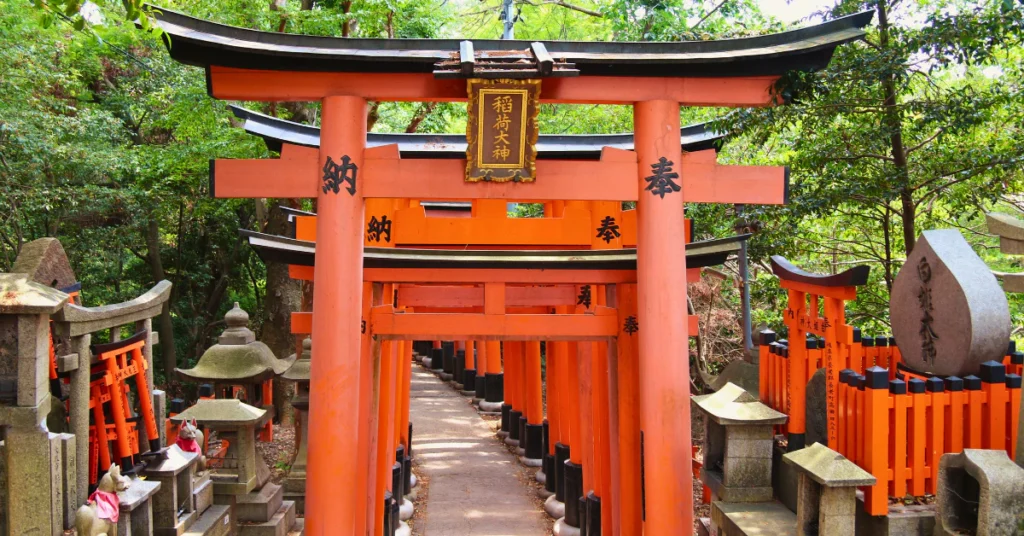
This is the shrine with thousands of red torii gates climbing up a mountain. It’s free, and it’s open 24 hours a day. That sounds perfect, until you learn something surprising: a recent survey ranked Fushimi Inari as one of the world’s worst tourist attractions. Not because it isn’t beautiful. It is. The problem is pure crowd size.
Midday visits often feel less like a peaceful shrine and more like a theme park line. Here’s the fix: check the crowd level before you go. Kyoto’s official tourism site runs a live “Congestion Forecast” tool with a real-time camera pointed at the shrine entrance. Pull it up on your phone, see how packed it is right now, and time your visit around it. Early morning or after sunset usually works best.
Kinkaku-ji (The Golden Pavilion)
This is the gold-covered temple that reflects in its own pond. It’s one of the most photographed spots in Japan.
- Hours: 9:00 AM to 5:00 PM, open daily
- Admission: 500 yen for adults (high school age and up)
Weekends and the noon to early afternoon window are the busiest times here. If you want photos without a crowd of strangers in the background, aim for right when it opens.
Kiyomizu-dera Temple
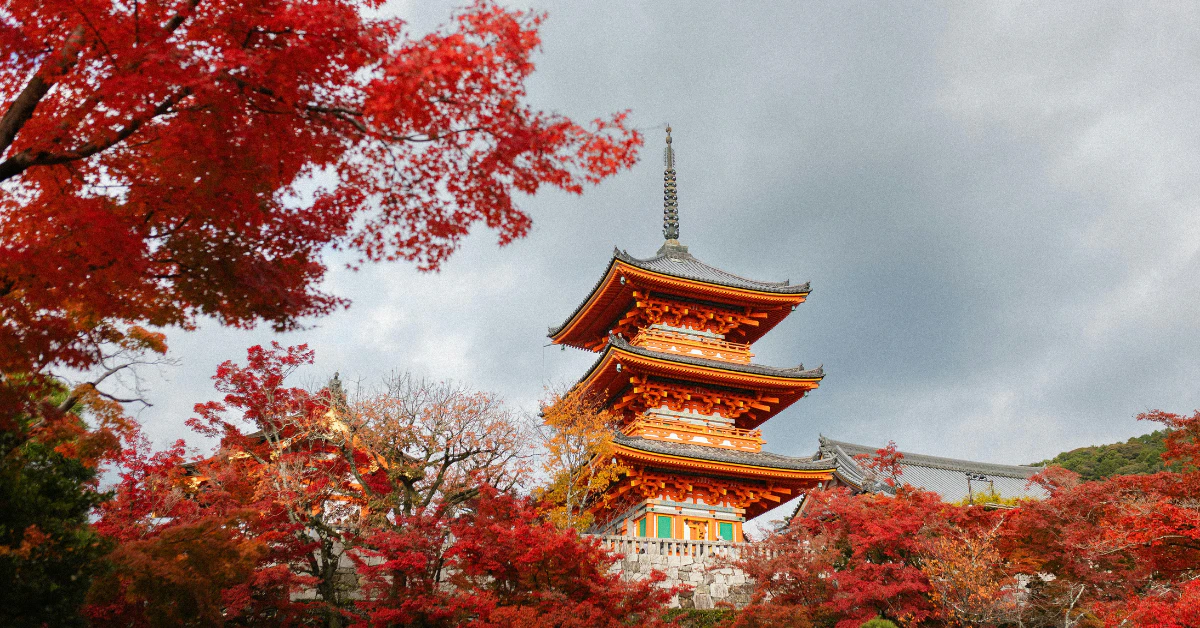
This hillside temple is known for its huge wooden viewing deck, which looks out over the whole city.
- Admission: roughly 400 to 500 yen (pricing has shifted in recent years, so it’s smart to check the exact figure before your visit)
Here’s the catch: the walk up to Kiyomizu-dera is one of the most crowded paths in the city. Locals who live in Kyoto describe it as wall to wall tourists on a normal afternoon. Going early in the day makes a real difference.
Arashiyama Bamboo Grove
This is the tall, green bamboo path that shows up in almost every Kyoto photo online.
- Admission: free
Free doesn’t mean empty, though. This spot gets packed even before 9:00 AM. If a quiet, peaceful bamboo walk is what you’re picturing, you’ll need to show up right at sunrise to get it.
Quick Reference Table
| Attraction | Admission | Hours | Crowd Level |
| Fushimi Inari Taisha | Free | Open 24 hours | Extremely high midday |
| Kinkaku-ji | 500 yen (adult) | 9:00 AM to 5:00 PM | High, especially weekends |
| Kiyomizu-dera | ~400 to 500 yen | Check current hours | High, worst on the approach path |
| Arashiyama Bamboo Grove | Free | Always open | High even before 9 AM |
The bottom line: none of these places are skippable. But if you treat “when” as seriously as “where,” you’ll actually enjoy them instead of just checking them off a list.
Navigating Kyoto in 2026: Crucial Transit and Cost Updates

If your Kyoto research is more than a year old, this section might change your whole plan. Two big things have shifted, and getting them wrong can cost you time and money.
The old bus pass is dead
For years, travelers loved the 700 yen Kyoto City Bus Day Pass. It let you ride buses all day for one flat price. That pass is gone. It stopped being sold in 2023, and it hasn’t worked at all since March 2024.
If you see it mentioned anywhere, ignore that advice. The current option is the 1,100 yen Subway and Bus 1-Day Pass instead (550 yen for children). It covers both subway lines and city buses, and it pays for itself if you take about five rides in one day.
Big suitcases and buses don’t mix anymore
Here’s something most guides still miss. Large suitcases are now effectively banned on Kyoto’s city buses. If a bus is crowded, the driver can simply refuse to let you board with a bulky bag.
Don’t get stuck at a bus stop with your luggage. Use the subway instead, grab a taxi, or drop your bags off using the Hands-Free Kyoto luggage service at Kyoto Station before you start sightseeing.
A major tax hike starts March 2026
This one affects your whole budget. Starting March 1, 2026, Kyoto’s accommodation tax is jumping, in some cases by as much as 900 percent.
Here’s how it breaks down:
| Nightly room cost | Tax per person, per night |
| Under 6,000 yen | 200 yen (no change) |
| 6,000 to 19,999 yen | 400 yen |
| 20,000 to 49,999 yen | 1,000 yen |
| 50,000 to 99,999 yen | 4,000 yen |
| 100,000 yen and up | 10,000 yen |
Good news for budget travelers: rooms under 6,000 yen a night keep the same low tax. The steep jumps hit mid-range and luxury stays hardest, so factor this into your hotel budget before you book.
Gion, Culture, and Hidden Rules
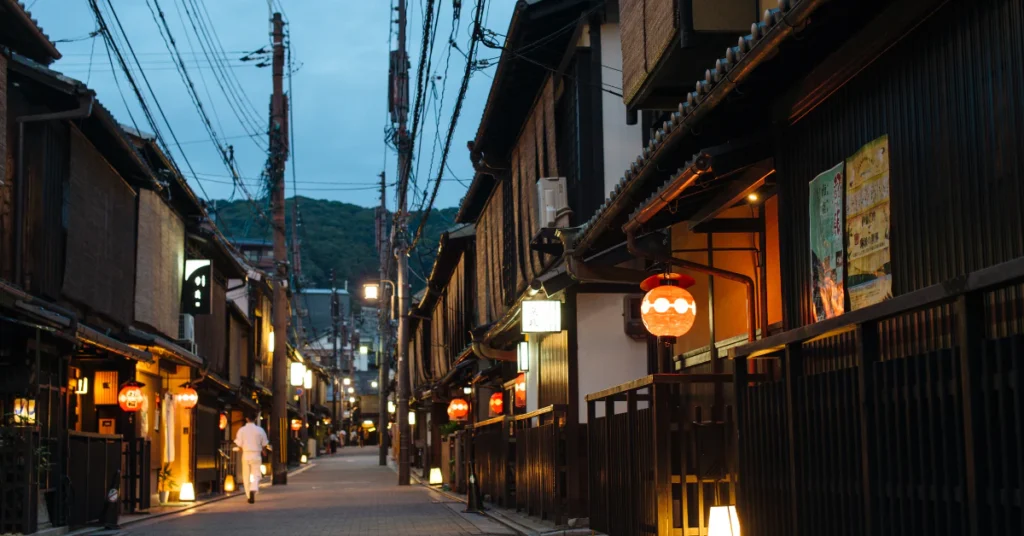
Some of Kyoto’s best experiences come with rules that nobody explains clearly. Get them wrong, and you could end up with a fine or an awkward stare. Get them right, and you’ll walk through the city like you actually know what you’re doing.
Gion’s photo rule, explained properly
Gion is Kyoto’s famous geisha district, full of narrow lanes and old wooden buildings. It’s a fantastic spot for an evening walk, and it’s genuinely one of the more unique things to do in Kyoto if you approach it the right way.
Here’s the part that confuses almost everyone. Gion has a photography and entry ban, but it does not cover the whole district. The rule only applies to specific private alleys, like Kosode Koji. Step onto one of those marked lanes with your camera out, and you risk a 10,000 yen fine.
Public streets are a different story. Hanamikoji Street, Gion’s main road, remains completely open. You can walk it, photograph it, and enjoy it freely. The key is watching for the posted signs. If a street has a “do not enter” or “no photography” sign, that’s a private lane. If it doesn’t, you’re fine.
Nijo Castle
This UNESCO World Heritage site was once home to a powerful shogun family, and it’s still one of the best examples of feudal-era architecture in Japan.
- Admission: around 1,300 yen for combined entry, which includes access to the Ninomaru Palace grounds
Give yourself real time here. This isn’t a quick photo stop.
Nishiki Market
Known as “Kyoto’s Kitchen,” Nishiki Market is a narrow, five-block stretch packed with food stalls, knife shops, and local snacks. It’s one of the best places in the city to eat your way through Kyoto’s food culture.
There’s one etiquette rule worth remembering before you go: walking while eating is considered rude here. If you buy something from a stall, step to the side and finish it there instead of wandering off with it in hand. It’s a small habit, but it makes a real difference in how you’re received.
After Dark: Nightlife and Safety
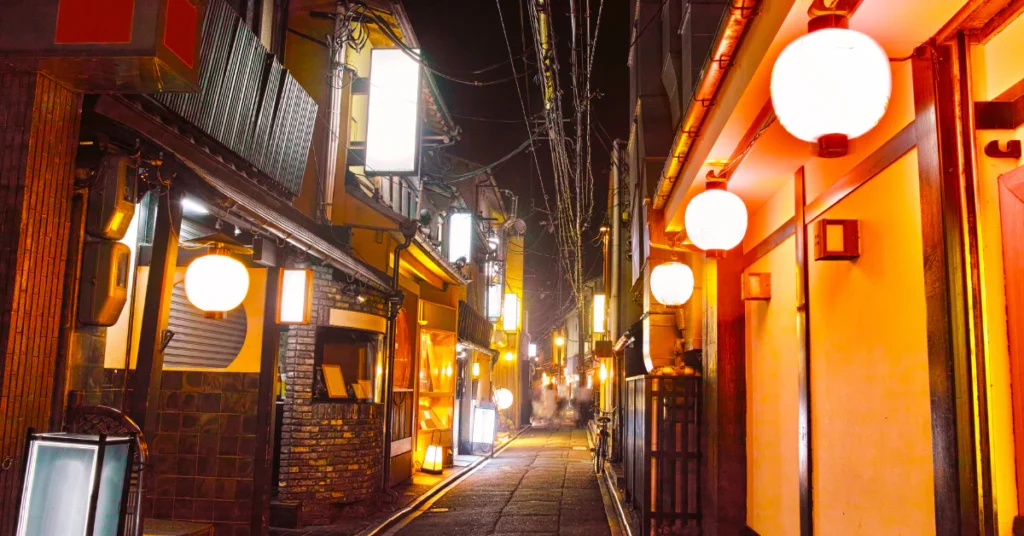
Kyoto doesn’t shut down at sunset. Once the temples close, the city shifts into a different kind of evening, and there’s a lot to enjoy if you know where to look.
For young adults and nightlife lovers
Pontocho Alley is one of Kyoto’s best spots for an evening out. It’s a narrow lane lined with restaurants and bars, many tucked into old wooden buildings along the river. It’s a great place to start an izakaya crawl, hopping between small spots for drinks and small plates instead of committing to one long dinner.
If you’re looking for something more playful, Kyoto also has game bars, casual spots that mix drinks with retro arcade games or tabletop fun. These are a great option for younger travelers or groups who want a lower-key, social night out instead of a formal dinner.
This is really where “things to do in Kyoto for young adults” comes together. Mixing a shrine-heavy day with a relaxed, social night keeps the trip from feeling like nonstop sightseeing.
Fushimi Inari at night: read this first
Since Fushimi Inari Taisha is open 24 hours a day, a night hike sounds like an obvious way to dodge the daytime crowds. It can be a stunning experience. But there’s a real safety issue that most guides never mention.
Wild boar sightings on the mountain trail have been documented repeatedly at night, over multiple years. This isn’t a rare rumor. Official warning signs are posted along the trail, but many tourists walk right past them, assuming the warnings don’t really apply or that the woods are as safe as they look during the day.
If you do hike Fushimi Inari after dark:
- Stay alert on the upper, quieter sections of the trail
- Don’t wander off the main path
- Take the warning signs seriously, even if the area feels calm
- Consider going with at least one other person rather than alone
A night visit here can absolutely be one of the best things to do in Kyoto at night. Just go in informed, not assuming it’s the same experience as a daytime crowd of tourists.
Winter Reality Check: What’s Actually Open in December
If you’re planning a December trip to Kyoto around the bamboo grove light-up, stop and read this first.
For years, one of the most recommended things to do in Kyoto in December was the Arashiyama Hanatouro illumination. It lit up the bamboo grove and the Togetsukyo Bridge with lanterns every winter, and it’s still mentioned all over the internet as a must-see December event.
Here’s the problem: it doesn’t exist anymore.
The event was discontinued after being held one final time in spring 2022. It has since been relaunched under a new name, the Arashiyama Tsukitouro, and it now runs in October instead of December. Paid entry zones were also introduced starting in 2025. If you show up in Arashiyama in December expecting glowing lanterns through the bamboo grove, you’ll be disappointed. That event has moved on without updating half the travel blogs still recommending it.
So what should you actually do in December?
The good news is that December still has a real upside: fewer crowds. The peak autumn leaf season and cherry blossom rush are both over, which means shorter lines and a calmer pace at spots like Fushimi Inari and Kinkaku-ji.
Instead of building your trip around an illumination event that no longer runs on this schedule, focus on:
- Visiting the major temples during their naturally quieter winter stretch
- Checking current, verified event calendars before assuming any seasonal festival is still happening
- Treating December as a “classic sights, smaller crowds” month rather than a festival-chasing one
The lanterns may have moved to October, but a quieter version of Kyoto’s greatest hits is still very much worth the trip in December.
Beating Temple Fatigue
There’s a real thing called temple fatigue, and it ruins more Kyoto trips than overcrowding does. Kyoto travel writers describe it as one of the most common problems first-time visitors run into. It happens when you pack your itinerary with shrine after shrine after temple, and by day two or three, they all start blurring together.
Here’s the honest truth: it is completely okay to skip some. Kyoto will not mind. Your trip will actually be better for it.
What to do in Kyoto in 1 day (without burning out)
If you only have one day, don’t try to squeeze in five temples. Pick one, and balance the rest of your day with something different.
A solid one-day plan looks like this:
- Morning: Visit one major site, like Fushimi Inari Taisha, early before the crowds build up
- Midday: Take a break from religious sites entirely. Walk the Philosopher’s Path, a quiet canal-side route that feels more like a peaceful stroll than a checklist stop
- Afternoon or as a full alternative day: Take a day trip to Nara. It’s an easy way to swap temple-hopping for something completely different: wandering Nara Park among the deer and visiting Todai-ji’s giant Buddha hall
The Nara option is especially good if you’re already feeling worn out from Kyoto’s temples. It’s not “another temple day.” It’s a shift in scenery, with animals wandering freely and a totally different pace.
The permission slip
If you’re standing outside your fourth temple of the day wondering why you don’t feel amazed anymore, that’s not you failing at travel. That’s temple fatigue, and it’s normal.
A better approach is quality over quantity. One well-timed, early-morning visit to a major site, paired with a walk or a day trip that has nothing to do with temples, will leave you with better memories than a rushed run through six shrines you can barely tell apart afterward.
Kyoto Trip Cost and Budget Breakdown
Money worries can eat up half the planning process, so let’s make this simple. Here’s what a realistic 7 day solo trip to Japan actually costs in 2026.
Two real budget scenarios
| Scenario | Total cost (7 days, solo, from the US) |
| Budget | Around $1,755 |
| Mid-range | Around $3,010 |
These numbers cover flights, lodging, food, local transport, and activities. The budget scenario assumes simple hotels, casual meals, and modest spending on extras. The mid-range scenario allows for nicer rooms, more restaurant meals, and a bit more room for paid activities.
A true backpacker approach can go even lower. Solo travelers using hostel dorms and keeping spending tight have reported full weeks in Japan for around $669 to $900, or roughly $96 a day. That’s flights aside, and it takes real discipline on food and extras to hit that number.
Don’t forget the new tax
Remember the accommodation tax hike starting March 1, 2026 from earlier in this guide? It directly affects these numbers. If you’re booking a mid-range or higher room, factor in the extra nightly tax on top of your room rate before you lock in a budget. Budget stays under 6,000 yen a night stay at the current low tax rate, so this hits mid-range and luxury bookings the hardest.
One thing to plan separately
International flights are not baked into your daily spending money. Treat them as a separate line item, and book them well ahead of your trip. Waiting too long usually means paying more, which can throw off even a carefully planned budget.
Frequently Asked Questions
What should you not miss in Kyoto?
Fushimi Inari Taisha, Kinkaku-ji, Kiyomizu-dera, Gion, Nishiki Market, and the Arashiyama Bamboo Grove make up the core “don’t miss” list. Just as important as visiting them is timing it right. All six get seriously crowded, so early morning or evening visits make a big difference.
Is $5,000 enough for a week in Japan?
Yes. A realistic one-week trip, including flights, lodging, food, and activities, typically falls between $2,250 and $5,000. That leaves room for a few splurges without needing five-star hotels every night.
Is 3 days enough in Kyoto?
Yes, for the core sights. Three days is enough to see the essentials without triggering temple fatigue. It’s tight if you also want to add a full Nara day trip, so plan accordingly if that’s on your list.
Is $1,000 enough for 1 week in Japan?
It’s tight, but doable at backpacker pace. Solo travelers using hostels and keeping meals simple have made it work for around $96 a day. Flights are usually not included in that number.
Are there any colors to avoid wearing in Japan?
This is mostly a myth. Black is expected at Japanese funerals, but there’s no general rule about colors to avoid while sightseeing. Wear whatever you’d normally travel in.
Is $100 USD a lot in Japan?
It covers a modest day of travel, close to the $96 a day backpacker average. It’s not “a lot” if you’re aiming for mid-range comfort, where daily costs run higher.
Final Thoughts
Kyoto in 2026 rewards travelers who show up informed. The bus pass you read about a year ago may not exist anymore. The tax on your hotel room has likely changed. Even that December illumination event everyone talks about has moved to a different month entirely.
None of that makes Kyoto harder to enjoy. It just means the old advice needs an update, and now you have it. Pick your must-see sights, time them around the crowds, give yourself permission to skip a temple or two, and let the rest of the trip unfold at a pace that actually feels good.