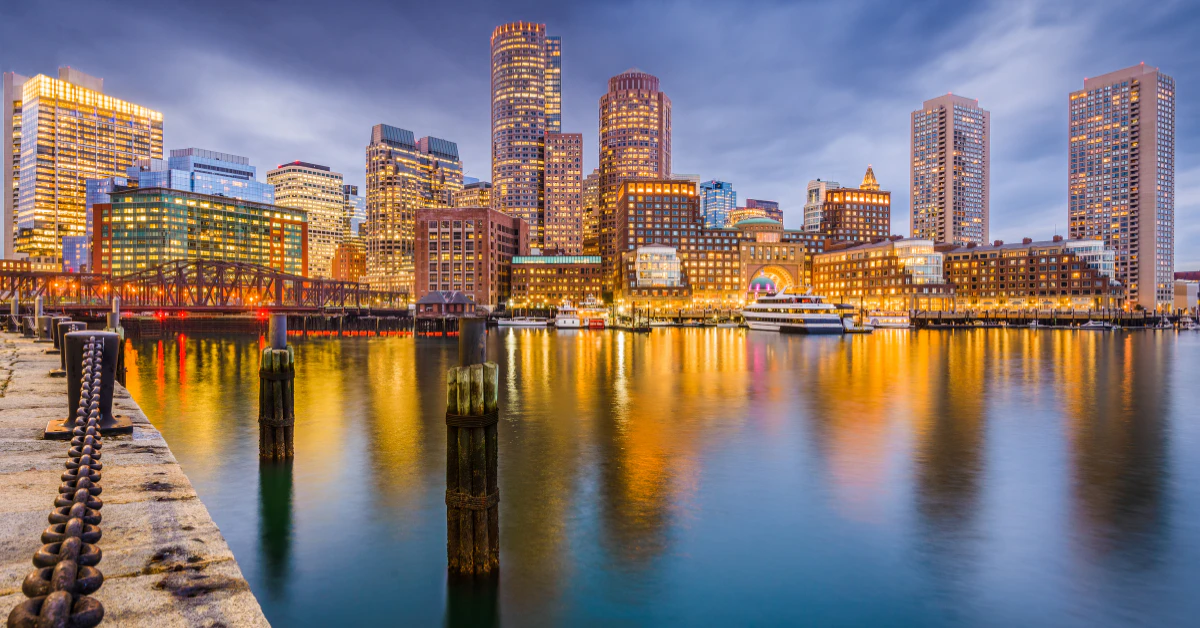
If you want the short version, here it is. The best area to stay in Boston for first time visitors is Back Bay or Beacon Hill. Both sit close to the city’s top sights, and both are easy to explore on foot.
Boston is a small, walkable city. It has a citywide Walk Score of 83, which is high for a major US city. That means you can skip the rental car and still see almost everything.
Back Bay gives you wide streets, pretty architecture, and quick access to shopping and restaurants. Beacon Hill offers a quieter, more historic feel with cobblestone streets, just steps from Boston Common.
Short on time? Pick one of these two neighborhoods, book early, and you will be close to everything that matters.
Why Booking Boston in 2026 is Different
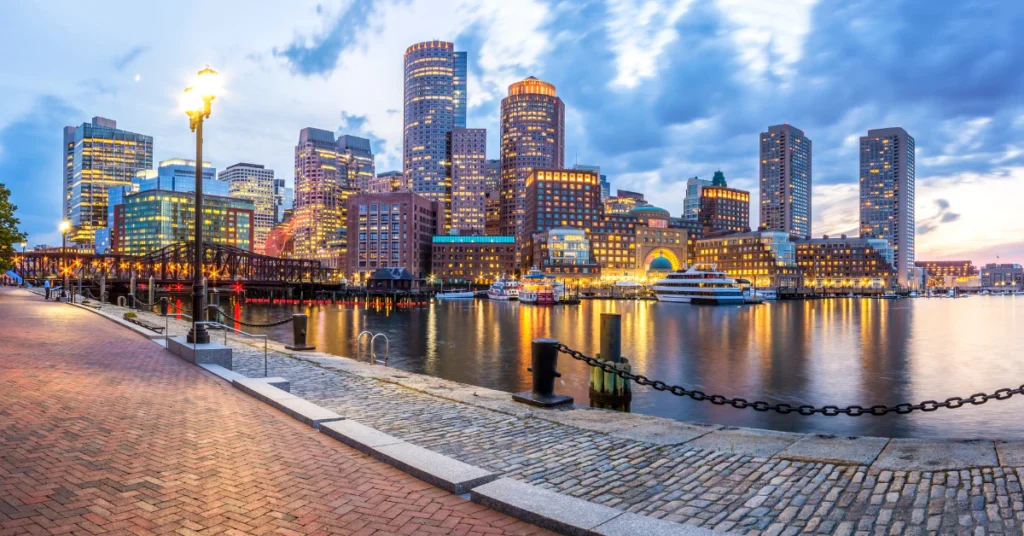
This year is not a normal year for Boston hotels. Two huge events are stacking on top of each other, and both are pushing prices up.
First, Boston hosted World Cup matches at Gillette Stadium, just outside the city, from June 11 to June 19. Hotels in the area reacted fast. The Liberty Hotel in Beacon Hill charged more than $800 a night around the match dates. That is about double its normal summer rate.
Second, 2026 marks America’s 250th birthday. Boston is a lead city for these celebrations, since so much of the Revolution happened here. The events run all year. They include the 250th anniversary of the Boston Massacre in March, the 130th Boston Marathon in April, and the Sail250 tall ships festival in July. Each one pulls in its own wave of visitors.
Put these together, and you get a city with far less hotel space than usual and a lot more demand.
So what does this mean for your trip?
If you are searching for where to stay in Boston on a budget, you need to think ahead. Book earlier than you normally would, ideally a few months out instead of a few weeks.
One solid, verified budget option is Hi Boston Hostel. It consistently comes up as the most affordable option in the city, even in a pricier year like this one.
The simple rule for 2026: pick your dates early, watch out for event weekends, and lock in a room as soon as you know when you’re coming.
Navigating the City: Why You Don’t Need a Car

Here’s a secret that can save you real money. The ride from Logan Airport into the city is free. The MBTA Silver Line SL1 runs from all four airport terminals straight to South Station, and it does not cost a thing. No fare, no ticket, no app needed. You just get on and go.
This is a huge deal if you are planning where to stay in Boston without a car. Once you land, you can skip the rental counter, skip the taxi line, and head right into downtown for free.
Getting around after that is just as simple. Boston runs on the MBTA, known locally as “the T.” Here is what it costs right now:
- One-way subway ride: $2.40
- 7-Day Pass (unlimited rides): $22.50
Starting in September 2026, the MBTA is also piloting a new transfer rule. You get unlimited transfers between subway, bus, and ferry within a two-hour window, as long as you pay with the same card or phone each time. That makes hopping between neighborhoods even easier.
So what is the real strategy here? Do not plan your trip around a parking spot. Plan it around a T stop.
If you are searching for where to stay in Boston to walk everywhere, the move is simple. Pick a hotel within a short walk of a subway station. From there, you can walk to most major sights, and hop on the T for anything farther out. You never need to think about traffic, parking fees, or finding your rental car again.
Skip the car. Grab a CharlieCard or just tap your phone at the station. That is really all the transit planning you need to do.
For current fares and route maps, check the official MBTA fares page.
Back Bay: The Best Area for First-Timers
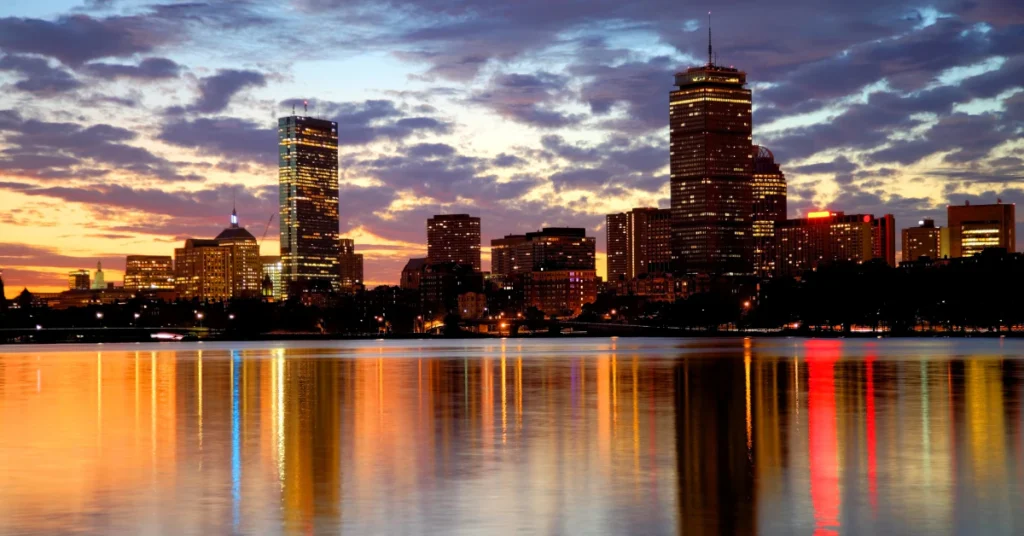
Back Bay is the neighborhood most visitors fall in love with first. It is lined with brownstone buildings, tree-shaded streets, and a style that feels both historic and polished.
If you are looking for the best area to stay in Boston for first time visitors, this is usually it. Here’s why it works so well.
A Central, Walkable Hub
Back Bay sits right in the middle of the action. From here, you can walk to Boston Common, one of the oldest public parks in the country. You can also walk straight into Newbury Street, Boston’s main shopping strip, full of boutiques, cafes, and restaurants.
This matters because Boston already scores high on walkability overall, and Back Bay is one of the neighborhoods that pulls that citywide number up. You will not need to plan long rides to see the main sights. Most of what you want is within a 15 to 20 minute walk.
For a trip that runs 3 to 4 days, this location saves you time every single day. Less time traveling means more time actually seeing the city.
Pros and Cons
Pro: Back Bay has a charm that is hard to match anywhere else in the city. The architecture alone makes it worth the walk. Add in the shopping, the park access, and the central location, and it becomes an easy first choice for most travelers.
Con: This charm comes at a price. Back Bay is consistently one of the priciest neighborhoods in Boston. If you are watching your budget closely, you may want to compare it against other areas before booking.
Where to Stay in Back Bay
Luxury pick:
The Fairmont Copley Plaza is the classic choice. It opened in 1912 and still carries that old grand-hotel feel, with marble floors and a prime spot right in Copley Square. If you want a true Boston landmark stay, this is it.
Mid-range pick:
The Charlesmark Hotel sits on Boylston Street and offers solid comfort without the luxury price tag. It is a smart pick for travelers who want a Back Bay address but don’t need the five-star extras.
Budget pick:
Newbury Guest House is a cozy, highly-rated bed-and-breakfast-style option on Newbury Street itself. It consistently earns strong guest reviews and gives you a budget-friendly way to stay right in the middle of Back Bay’s best shopping.
Beacon Hill: Best for Couples and Cobblestone Charm
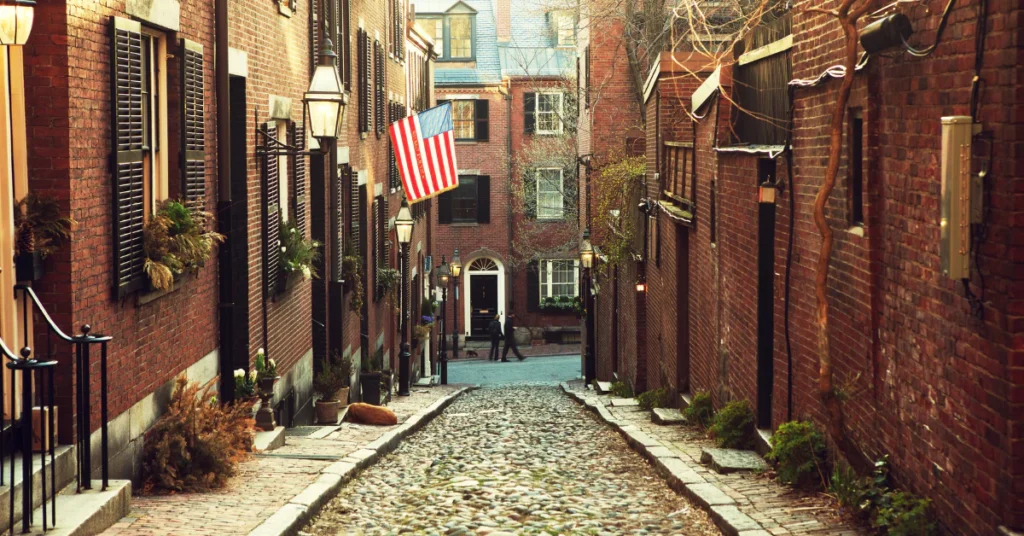
Beacon Hill feels like stepping into a different century. The streets here are paved with cobblestones, lit by old-fashioned gas lamps, and lined with narrow brick townhouses. It is one of the most photographed parts of Boston, and for good reason.
If you are looking into the best places to stay in Boston for couples, Beacon Hill should be near the top of your list.
A Quieter, More Romantic Pace
Back Bay has energy and shopping. Beacon Hill has quiet and charm. The pace here is slower, the streets are narrower, and the whole area feels more like a storybook neighborhood than a busy tourist hub.
It is still highly walkable, and it sits right next to Boston Common, so you are never far from the main sights. On top of that, it is known as one of the safest, most well kept areas in the city, which makes evening strolls easy to enjoy without a second thought.
For couples who want quiet dinners, slow walks, and pretty views over practical convenience, this neighborhood delivers.
Pros and Cons
Pro: The historic atmosphere here is hard to beat anywhere else in Boston. Between the lamps, the brick rowhouses, and the cobblestones, every walk feels like a scene from the past.
Con: Those same cobblestones are not kind to suitcases. The hills are steep in places, and dragging luggage uphill can be a workout. Lodging options are also more limited here than in bigger neighborhoods, and rooms tend to run on the expensive side.
Where to Stay in Beacon Hill
Boutique luxury pick: The Liberty Hotel (215 Charles St, Beacon Hill). Originally built as a jail in 1851, it was redesigned by a team of architects, historians, and conservationists into one of Boston’s most distinctive landmark hotels.
Mid-range pick: Beacon Hill Hotel. Housed in a fully renovated 19th-century building with boutique-style rooms, it runs noticeably lower than its neighbor XV Beacon while staying in the same historic pocket of the neighborhood.
North End: The Historic and Food-Focused Pick
The North End is where history and food collide. This is Boston’s oldest residential neighborhood, and it is also home to the city’s best known Italian food scene.
Walk the Freedom Trail, Then Eat Your Way Through Dinner
Many visitors start their Freedom Trail walk right here. The path runs through the North End, passing sites tied directly to the American Revolution before continuing on into the rest of the city.
The terrain itself is flat, which makes the whole area easy to explore on foot. There are no steep hills to climb like you’ll find in Beacon Hill. Combined with a high Walk Score, this makes the North End one of the simplest neighborhoods to navigate with a stroller, tired feet, or heavy bags.
Once the sightseeing winds down, dinner is never far. The North End is packed with Italian restaurants, bakeries, and cafes, many run by families who have been there for generations. You can walk out of your hotel and be seated for dinner in minutes.
Pros and Cons
Pro: The dining here is hard to match anywhere else in Boston. You get history and incredible food within the same few blocks, and the area is considered very safe, day or night.
Con: This popularity comes with crowds. In peak summer months, the sidewalks and restaurants here can get packed with tourists, and waiting for a table becomes part of the experience. Hotel inventory is also smaller here than in bigger neighborhoods like Back Bay, so options can book up fast.
Where to Stay in the North End
Boutique/waterfront pick: Battery Wharf Hotel, Boston Waterfront (3 Battery Wharf). Sits directly on Boston Harbor in the North End, with harbor views, an on-site spa, and walking access to the Freedom Trail and Old North Church.
Mid-range pick: The Boxer Boston. A trendy boutique hotel with an industrial-chic design, cited as one of the standout stays near the North End.
Downtown & Financial District: Best for Short Trips
If your trip is short, two days or less, Downtown is the practical choice. This is the business and transit heart of the city, and it puts you within walking distance of nearly everything a first-time visitor wants to see.
Everything Is Right There
Faneuil Hall and Quincy Market sit right in this area, packed with food stalls, street performers, and shops. The Freedom Trail also runs through here, so you can step outside your hotel and start sightseeing right away.
Transit access is just as strong. South Station, one of the city’s biggest transit hubs, connects you to the subway, buses, and trains heading out of the city. If you landed at Logan Airport and rode the free Silver Line in, there’s a good chance it already dropped you near here.
A Different Kind of Neighborhood
Where Back Bay has charm, Downtown has function. This area is built around offices and business, not rowhouses and tree-lined streets. Once the workday ends, especially on weeknights, the energy here drops fast. Restaurants and shops close earlier, and the streets quiet down.
Pros and Cons
Pro: Nothing beats Downtown for pure convenience. Everything is close, transit connections are excellent, and you can walk to major sights without planning long trips across the city.
Con: This area lacks the neighborhood feel you get in Back Bay or the North End. It can feel strictly commercial, and it empties out noticeably once business hours end.
Where to Stay in Downtown
Boutique pick: The Godfrey Hotel Boston (505 Washington Street, Downtown Crossing). Built inside two historic buildings with a restored 1908 Gothic Revival facade, steps from Boston Common and the Theater District.
Budget-friendly pick: Harborside Inn of Boston (185 State St). Originally built in 1846, with a nautical, European-inspired boutique design, consistently one of the better-value picks in Downtown.
Seaport & South Boston: Trendy Waterfront Living
Not every part of Boston looks like a history book. The Seaport District and South Boston, often called “Southie,” show a newer, shinier side of the city.
A Modern Contrast to the Old City
The Seaport is full of glass buildings, harbor views, and newly built restaurants and hotels. It feels more like a growing city skyline than the brick and cobblestone streets found elsewhere in Boston.
Right next to it, South Boston offers something a little different. This area is highly walkable in its own right. The South Boston Waterfront scores a 91 on Walk Score, and the nearby D Street–West Broadway area matches it with the same 91 rating. Both numbers are higher than the citywide average, so getting around on foot here is easy.
You also get real ocean views in this part of the city, something you will not find in Back Bay or Beacon Hill.
Pros and Cons
Pro: The hotels here tend to be newer and more modern, and the dining scene is trendy, with plenty of fresh options near the water. For travelers who want a more contemporary stay, this area delivers.
Con: This is not where the historic sights are. The Freedom Trail and most of the oldest landmarks sit farther away, which usually means a longer walk or a short ride into the city center for sightseeing.
Where to Stay in Seaport & South Boston
Modern waterfront pick: Omni Boston Hotel at the Seaport. A newer, large-scale waterfront property in the heart of the Seaport District.
Value pick: Seaport Hotel Boston. A 4-star, eco-certified hotel near the New England Aquarium, consistently priced lower than Omni in the same district.
Fenway & Kenmore: Best for Sports Fans
If a Red Sox game is on your schedule, this is your neighborhood. Fenway and Kenmore sit right around Fenway Park, making it the easiest base for anyone catching a game.
It is also a strong fit if you’re visiting nearby colleges or universities, since several sit within walking distance.
This area is one of the most walkable in the entire city. The Fenway-Kenmore-Longwood area scores a 95 on Walk Score, even higher than Back Bay or Beacon Hill. That means almost everything you need, food, shops, transit, is within easy reach on foot.
That said, this is a neighborhood pick, not a sightseeing pick. If you are not here for a game or a campus visit, you may find yourself a bit too far from the Freedom Trail and the city’s main historic sights. A short T ride gets you there, but it is not the walk-out-the-door convenience you’d get in Back Bay or the North End.
Pros and Cons
Pro: Unmatched walkability and the best possible location for game days or college visits.
Con: Farther from the main tourist core, so plan on using the T for sightseeing days.
Where to Stay in Fenway & Kenmore
Game-day pick: Hotel Commonwealth (500 Commonwealth Ave). A 4.5-star boutique hotel literally a 2-minute walk from Fenway Park and 1 minute from Kenmore Square and the T station.
Budget pick: Oasis Guest House. A guesthouse-style budget option in the Fenway-Kenmore area, consistently among the lowest-priced listings in the neighborhood.
Safety Guide: Where to Avoid in Boston
Boston is one of the safer big cities in the country, and that holds true for solo travelers too. But “generally safe” is not the same as “no need to think about it.” Here is the honest, specific breakdown.
For Solo Female Travelers
If you are researching where to stay in Boston solo female, the good news is simple. Neighborhoods like Back Bay, Beacon Hill, and the North End are well lit, busy, and considered safe both day and night. Staying in one of these areas gives you a strong base with little to worry about.
The main rule is not about neighborhoods. It is about timing and specific spots.
Two Specific Spots to Watch
Rather than giving you a vague warning about “staying alert,” here is exactly what locals point to:
- Downtown Crossing and Park Street can feel less comfortable late at night, after shops close and the crowds thin out. This is not a dangerous zone during the day, but it is worth avoiding or passing through quickly after dark.
- Boston Common is a beautiful park during the day, but walking through it alone at night is not recommended. Stick to busy streets after sunset instead.
Outside of these two specific spots, most tourist areas remain comfortable to walk through at night.
What About “Mass and Cass”?
You may come across mentions of “Mass and Cass,” the area around Massachusetts Avenue and Melnea Cass Boulevard. This is a real, ongoing public health situation tied to drug use and homelessness, and the city has been actively working on it for years.
Here is the important part for your trip. This area sits on the edge of the South End, far from any neighborhood covered in this guide. It is not somewhere tourists stay, walk through, or need to plan around. You can know it exists without it affecting your trip at all.
The bottom line: stick to the neighborhoods above, use normal city sense at night, and you will have a smooth, safe trip.
Boston Neighborhoods at a Glance
Decision fatigue is real when you’re comparing six different neighborhoods. Here is the quick version, side by side.
| Neighborhood | Vibe | Best For | Price Tier |
| Back Bay | Elegant, central | First-timers | $$$ |
| Beacon Hill | Historic, quiet | Couples | $$$ |
| North End | Lively, food-focused | Foodies & history buffs | $$ |
| Downtown | Busy, commercial | Short trips | $$ |
| Seaport & South Boston | Modern, waterfront | Trendy stays | $$ |
| Fenway & Kenmore | Walkable, youthful | Sports fans | $ to $$ |
As you can see, Boston runs on the pricier side almost everywhere. There is no true “cheap” neighborhood in the city center.
If budget is your main concern, the most reliable baseline is Hi Boston Hostel, located in the Downtown and Theatre District area. It consistently comes up as the most affordable option in the city, even during a high-demand year like 2026, and it still keeps you close to the main sights.
Frequently Asked Questions
What is the best area of Boston to stay for tourists?
Back Bay and Beacon Hill are the best areas for most tourists. Both are central, walkable, and close to Boston Common, making them easy bases for a first visit.
Is it better to stay in Back Bay or Downtown Boston?
Back Bay is better for longer stays, since it offers more charm and is still close to the main sights. Downtown is better for short trips of two days or less, since it puts you right next to Faneuil Hall and major transit hubs.
Is it better to stay in North or South Boston?
This depends on what you want. The North End is better for food and walking to historic sights, while South Boston (Southie) offers a more modern, residential feel with good value, though it sits a bit farther from the core tourist area.
What areas of Boston should you stay away from?
For tourists, the main spots to use extra caution are Downtown Crossing and Park Street late at night, along with Boston Common after dark if you’re alone. Most other tourist areas remain comfortable both day and night.
What’s the safest area in Boston?
Beacon Hill, Back Bay, and the North End are consistently named as the safest, most walkable neighborhoods in the city, both during the day and at night.
Is it safe to walk downtown Boston at night?
Yes, for the most part. Downtown is considered safe at night, but Downtown Crossing and Park Street specifically can feel less comfortable once shops close and crowds thin out.
Is Boston safe right now for tourists?
Yes. Boston continues to rank among the safer major US cities for visitors, with the usual advice to watch your belongings in crowded tourist spots.
Which part of Boston is the most walkable?
Fenway and Kenmore score the highest at 95 on Walk Score, but Back Bay, Beacon Hill, and the North End are also highly walkable, all well above the citywide average of 83.
Is it easy to get around in Boston without a car?
Yes. The MBTA subway connects nearly every neighborhood in this guide, and the Silver Line from Logan Airport into downtown is completely free.
Conclusion
Boston rewards visitors who plan ahead, especially in 2026. Pick a walkable neighborhood like Back Bay or Beacon Hill if it’s your first trip, lean on the T instead of a rental car, and book early given this year’s packed events calendar. Do that, and you’ll spend less time figuring out logistics and more time actually enjoying the city.