
The best things to do in Savannah, Georgia start with walking its 22 historic squares. Add a stop at Forsyth Park and Bonaventure Cemetery. Tour the Owens-Thomas House. Drive under the oak canopy at Wormsloe Historic Site. Then eat at local staples like The Grey and The Olde Pink House. That’s a strong core list for any first trip.
Savannah’s Historic District covers about 2.5 square miles. It holds 22 of the original 24 squares laid out in the 1700s. That’s a lot to see on foot, and it adds up fast. Give yourself at least 3 full days. Trying to do it all in one day means rushing, and rushing means missing the small details that make this city worth visiting.
One more note before you plan anything: every admission price and tour rate in this guide is verified as of September 2026. Prices change often in this industry, so always double-check before you book.
Top 10 Things to Do in Downtown Savannah, GA (Squares, Parks & Free Icons)
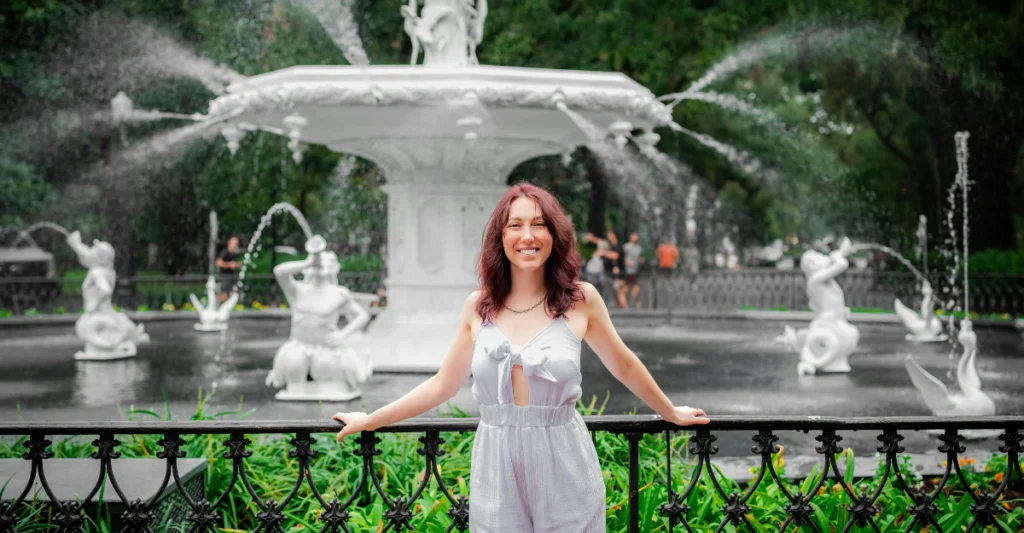
Stroll Forsyth Park and the 1858 Cast-Iron Fountain
Forsyth Park anchors the south end of the Historic District. It covers 30 acres and dates back to the 1840s, with the park taking its full shape by 1851. The centerpiece is a two-tiered cast-iron fountain installed in 1858, and it’s one of the most photographed spots in the whole city.
Go early in the morning if you want good photos without a crowd of other tourists in the frame. The light is softer then too, and the walking paths are quiet.
Walk the 22 Remaining Historic Squares
Savannah’s colonial founders laid out 24 public squares across the city grid in the 1700s. Today, 22 of them still survive, spread across roughly 2.5 square miles. This grid is what makes downtown Savannah so walkable. You can wander from one square to the next, resting under oak trees along the way, and never really leave the shade.
Pick a few squares each day instead of trying to see all 22 at once. Each one has its own feel, and rushing through them defeats the point.
Chippewa Square and the Savannah History Museum (The Forrest Gump Bench Truth)
Chippewa Square is where the bus stop scene from Forrest Gump was filmed. Here’s the catch: the bench itself was never a permanent fixture. It was a prop built just for the movie and removed once filming wrapped.
If you want to actually see and sit near a version of that bench, head to the Savannah History Museum, which holds a replica. Chippewa Square is still worth a visit for the architecture and history around it, just don’t expect to find the bench waiting there.
Step Inside the Cathedral Basilica of St. John the Baptist
This church got a major upgrade in April 2020, when Pope Francis named it a Minor Basilica. That made it only the 15th diocesan cathedral in the entire United States to receive that honor, and it’s now officially called the Cathedral Basilica of St. John the Baptist, even though most locals still just call it “the Cathedral.”
A few practical notes before you go:
- Admission is free, but a $3 donation is suggested.
- The church closes to sightseers during Mass, roughly 11:30 AM to 1:00 PM, so time your visit around that.
- There are no public restrooms inside, so plan ahead.
Sample Free Honey and Mead at Savannah Bee Company
Savannah Bee Company offers free honey tastings right in the store, which makes it an easy, no-cost stop to add to a walking route downtown. If you want something a little stronger, they also offer paid mead flights for anyone who wants to try a local twist on the classic honey wine.
Walk the Cobblestones of River Street and Watch Cargo Ships
River Street runs along the water and still has its original cobblestone paving. Wander along it and you’ll likely see massive cargo ships gliding past, since Savannah’s port is one of the busiest in the country. The historic warehouses lining the street now hold shops and restaurants, and the view of the river itself is worth the walk.
One honest note: skip the souvenir stalls packed along this stretch. They tend to be overpriced, and you’ll find better deals and more original items elsewhere downtown.
Tour the Owens-Thomas House and Slave Quarters
This house museum stands out because it doesn’t just focus on architecture. It tells the full story, including the lives of the enslaved people who worked and lived on the property. Many historic home tours in Savannah skip that part entirely. This one doesn’t, and that honesty is exactly why it’s worth your time.
Walking through both the main house and the slave quarters gives you a much clearer picture of what daily life actually looked like here in the 1800s, not just the polished version.
Visit the Mercer-Williams House (With Realistic Expectations)
The Mercer-Williams House is famous because of Midnight in the Garden of Good and Evil, the book and film tied to a real 1981 shooting inside the home. That’s what draws most visitors in the first place.
Here’s what you need to know before you go: tour guides are not allowed to talk about the Danny Hansford shooting or any part of the murder plot from the book. So if you’re hoping for a true crime deep dive, you won’t get it here. The tour instead focuses on the house’s design, furnishings, and general history.
We’re not listing a specific ticket price for this one, since 2026 pricing hasn’t been independently verified. Check the official site directly before you plan your visit.
Explore the Pin Point Heritage Museum
Pin Point Heritage Museum sits inside a former oyster and crab processing factory, and it’s dedicated to Gullah-Geechee culture and history. The Gullah-Geechee are descendants of enslaved West Africans who settled along the coastal South, and their traditions, language, and food culture are still alive in communities near Savannah today.
This museum is a quieter stop compared to the big downtown attractions, but it adds real depth to a Savannah trip if you want to understand more than just the antebellum mansion side of the city’s history.
Book an Old Town Trolley or Historic Savannah Segway Tour
If you want a guided overview of the city without walking the whole thing yourself, you’ve got two solid options.
Old Town Trolley runs a 90-minute, hop-on-hop-off loop with 16 stops around downtown. Trolleys come by roughly every 20 minutes, so you’re not stuck waiting long. A 1-day adult ticket runs about $41.95 to $43 (prices verified as of September 2026). Just note that this tour does not run on March 17, since that’s St. Patrick’s Day and the whole city shuts down for the parade.
Historic Savannah Segway Tour is the more active option. A 60-minute tour runs about $50 to $55, and a 90-minute tour runs about $70 to $75 (prices verified as of September 2026). Riders need to be at least 16 years old, 5 feet tall, and 100 pounds, so this one isn’t for younger kids.
One thing worth knowing before you hop on a trolley: not everyone downtown is thrilled about them. In October 2023, Savannah residents brought complaints to the city’s Tourism Advisory Council, saying trolleys pass through spots like Chippewa Square more than 100 times a day. It’s a reminder that the historic squares are still someone’s neighborhood, not just a backdrop for tourists.
Unique Things to Do in Savannah, GA for Couples (Gothic Cemeteries and Oak Canopies)
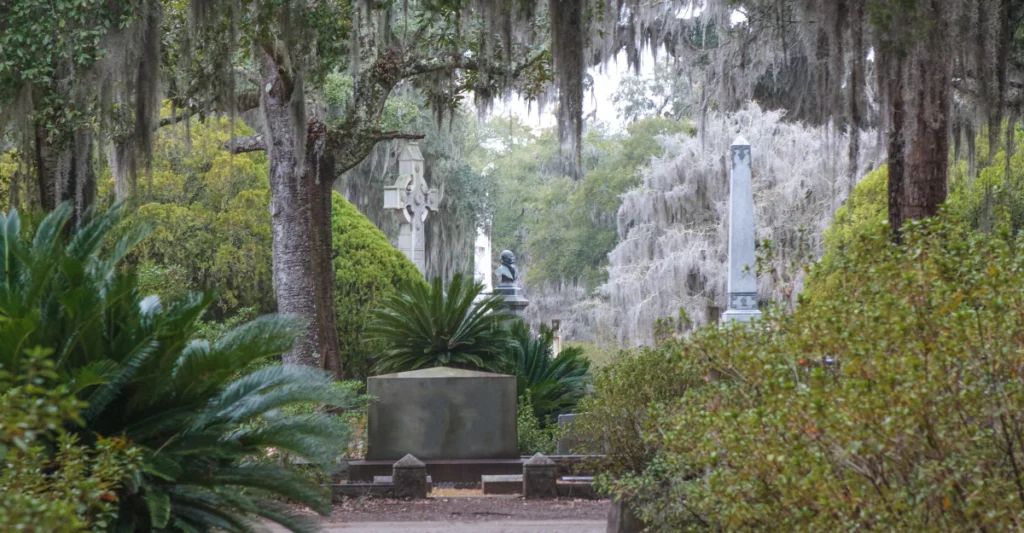
Wander Bonaventure Cemetery (And Catch the Free Monthly Tour)
Bonaventure Cemetery sits along the Wilmington River and covers about 100 acres. It holds roughly 45,000 graves, along with old oak trees dripping in Spanish moss and rows of Victorian-era statues. It’s quiet, atmospheric, and honestly one of the more romantic spots in Savannah if you’re the type of couple who likes slow walks and old stories over crowded bars.
Entry is free, and the gates are open daily from 8:00 AM to 5:00 PM. If you want more context than just wandering on your own, there’s a free guided tour on the second weekend of every month. Just note the start time changed as of July 1, 2026: tours now begin at 1:00 PM instead of the earlier 2:00 PM slot, so double check before you show up.
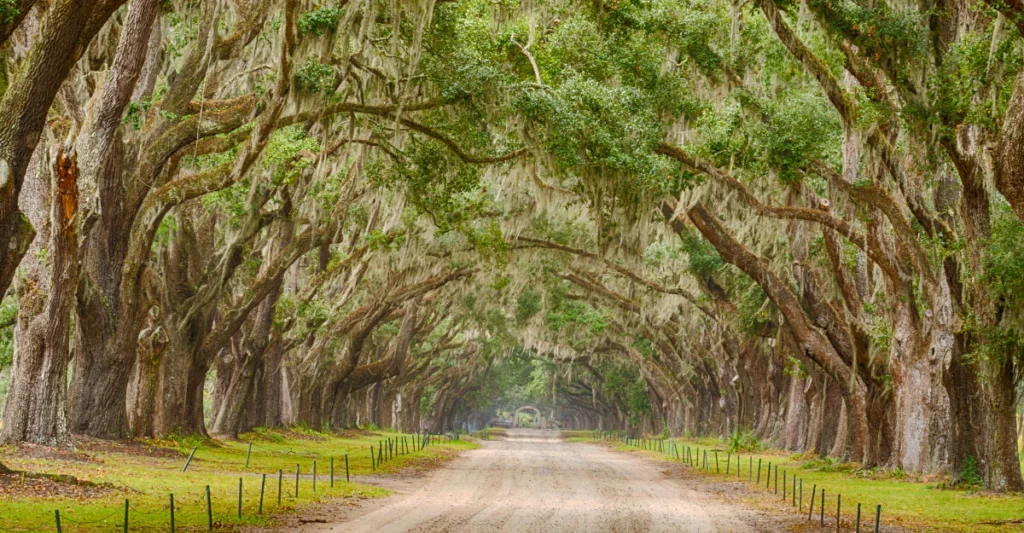
Drive the Live Oak Allee at Wormsloe Historic Site
Wormsloe Historic Site is built around a 1.5-mile avenue of live oak trees, planted back in the 1890s. Driving or walking under that canopy is one of the most photographed moments you can have in Savannah, and it leads to the site of Noble Jones’s original 1736 colonial estate, where you can still see the tabby ruins of his fortified home.
One correction worth making here: some older blog posts describe Wormsloe’s trail as 7 miles long. That’s not accurate. The full property covers about 822 acres, and the oak allee itself is 1.5 miles.
Here’s the current admission breakdown (prices verified as of September 2026):
| Age Group | Price |
| Adults | $10 |
| Seniors (62+) | $9 |
| Youth (6–17) | $4.50 |
| Children (0–5) | $2 |
The site is open daily from 9:00 AM to 4:45 or 5:00 PM, depending on the season, and it closes on Thanksgiving and Christmas. Give yourself an hour or two here. It’s not a huge site, but the walk under the oaks is worth taking slowly, especially if you’re visiting as a couple looking for a calmer stop between the busier parts of downtown.
Fun Things to Do in Savannah, GA for Adults and Young Adults (Nightlife, To-Go Cups and Local Districts)
How Savannah’s Open-Container “To-Go Cup” Law Actually Works
Yes, it’s real. You can legally walk around parts of downtown Savannah with a drink in hand. But the rule has specific limits, and breaking them can get you fined, so it’s worth knowing exactly how it works.
Here’s the breakdown, straight from the city ordinance:
- Your drink has to be in a plastic or paper cup. No glass, no cans, no bottles.
- The cup can’t hold more than 16 ounces.
- You’re only allowed one drink per person removed from a bar or restaurant at a time.
- This only applies within a set historic-district zone, generally north of Jones Street.
Bars and restaurants inside the zone are used to this and will usually pour your drink into a to-go cup automatically if you ask. Just don’t wander south of the zone boundary still holding it. You can read the full ordinance on the City of Savannah’s official site if you want the exact legal wording.
Take an Evening Haunted Pub Crawl or Walking Ghost Tour
Nighttime ghost tours and haunted pub crawls are close to a rite of passage for adult trips to Savannah. The city’s older cemeteries, colonial history, and Victorian architecture give these tours a lot of real material to work with, without needing to lean on gimmicks.
We won’t repeat any of the “most haunted city in America” style rankings you’ll see in marketing copy, since those claims usually can’t be traced back to a real source. What we can say is that a good evening tour combines real local history with a fun, slightly spooky atmosphere, and it’s an easy way to see the squares at night from a different angle than a daytime walk.
Skip the City Market Tourist Trap for Starland, Victorian District and Broughton Street
City Market gets a lot of hype, but it’s also been named one of the worst tourist traps in Georgia. It’s touristy, the prices run high, and locals tend to steer clear of it. River Street has a similar reputation among residents. One local summed it up on Reddit by saying it’s “pretty and historic but it sucks for locals.”
If you want a more authentic hangout spot, try these instead:
- Broughton Street for indie, locally owned shopping instead of chain stores.
- Victorian District for a look at Savannah’s colorful post-Civil War architecture, away from the crowds.
- Starland District for a more artsy, laid-back scene with local shops and bars.
These areas give you a better sense of where Savannah actually lives day to day, instead of just where the tour buses stop.
The Essential Savannah Food and Sweet Treat Crawl
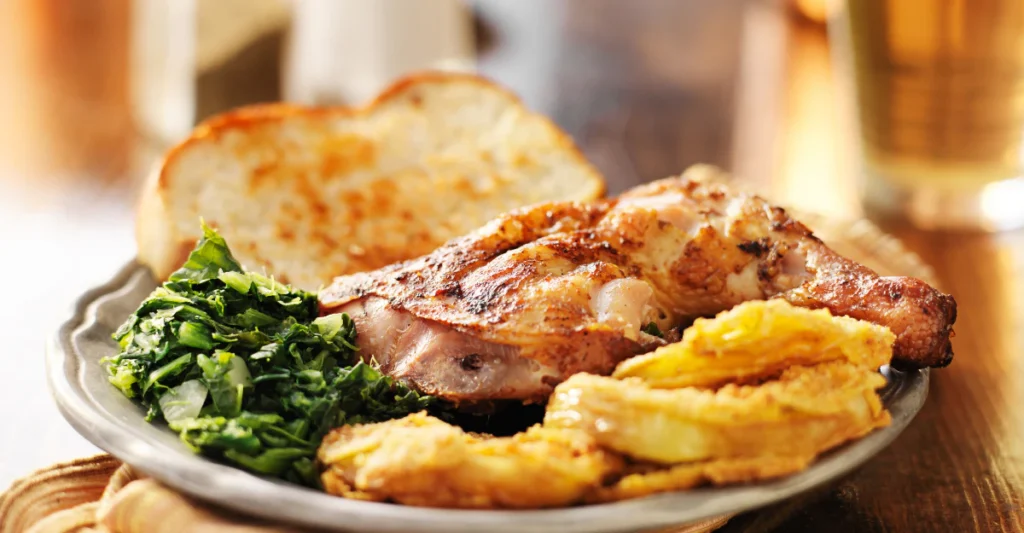
The Grey is the kind of restaurant people plan a whole trip around. Chef Mashama Bailey runs the kitchen here, serving refined Southern food inside a restored 1938 Art Deco Greyhound bus terminal. The building alone is worth seeing, and the food backs it up.
The Olde Pink House sits inside an 18th-century mansion on Reynolds Square and serves the kind of classic Southern comfort food you’d expect from a place this old and this loved. Reservations fill up weeks in advance, so book early if you have your heart set on the main dining room. If you can’t get a table, try the cellar tavern downstairs instead. It’s more casual, usually easier to get into, and still gives you the same historic atmosphere.
Cotton & Rye is a solid pick if you want elevated Southern cooking without downtown’s tourist-strip prices. It’s set in a former mid-century bank building, and it’s become a genuine local favorite rather than just a stop on a tour bus route.
Leopold’s Ice Cream has been around since 1919, and it’s the birthplace of the original Tutti-Frutti flavor. It sits right on Broughton Street, and yes, there’s almost always a line. It’s worth the wait anyway. This is one of those stops that shows up again and again because people actually love it, not just because it photographs well.
Tybee Island Day Trip (And How to Beat the Drawbridge Trap)
Tybee Island sits about 18 miles from downtown Savannah, right on the coast. It’s the closest beach to the city, and it’s a solid day trip if you want sand, a pier to walk, and some ocean air after a few days of squares and cemeteries.
But here’s the part most guides skip: getting there isn’t always the quick trip Google Maps promises.
The US-80 Single Drawbridge Bottleneck
The only road connecting Tybee Island to Savannah is US-80, and it crosses a single drawbridge. When boat traffic needs to pass through, the bridge opens, and cars back up on both sides. What looks like a 20-minute drive on your GPS can easily turn into 45 to 60 minutes or more, each way, if you hit the bridge at the wrong time.
The fix is simple: leave downtown before 9:00 AM. Traffic is lighter, the bridge opens less often at that hour, and you’ll actually get to spend your day on the beach instead of stuck in your car.
What to Budget for Parking
Once you’re on the island, expect to pay for parking. Beach lots typically run about $8 to $25 a day, and street meters run roughly $0.50 to $3.50 an hour depending on how close you are to the sand. Bring cash or a card and plan for this cost ahead of time so it doesn’t catch you off guard.
Savannah Trip Logistics: Free Parking Rules, Best Seasons and Airport Access
How to Park Free in Downtown Savannah (The Rules Most Tourists Miss)
Parking downtown trips up a lot of first-time visitors, mostly because nobody tells them the free parking windows. Here’s what actually applies:
- Metered street parking is free every Sunday, citywide.
- Parking is free daily south of Gaston Street.
- North of Liberty Street, meters are free after 8:00 PM, Monday through Saturday.
- South of Liberty Street, meters are free after 5:00 PM on weekdays.
There are also two lots most visitors never find, both inside Forsyth Park itself, with a 90-minute free limit. One is accessible from Park Street, and the other from Drayton Street near Hotel Bardo. Both put you within walking distance of the park and a good chunk of downtown.
Best Time to Visit: Spring vs. Fall Festival Windows
Spring (March through May) brings blooming azaleas and the Savannah Music Festival, but it’s also peak season, so expect bigger crowds and higher hotel rates.
Fall (September through November) tends to have drier weather and cooler temperatures, plus the Savannah Jazz Festival and the SCAD Film Festival. If you’d rather skip the crowds and still get good weather, fall is the stronger pick.
Flying Into Savannah/Hilton Head International Airport (SAV)
Most visitors fly into Savannah/Hilton Head International Airport (SAV), which sits a short drive from downtown. Once you land, a rideshare is usually the easiest way into the historic district, especially since parking downtown is limited and mostly metered. If you plan to take day trips outside the city, like Tybee Island or Wormsloe, a rental car gives you more flexibility, but you won’t need one just to explore downtown itself.
Frequently Asked Questions About Visiting Savannah, GA
Where to avoid staying in Savannah, GA?
Savannah’s crime picture is mixed. The Savannah Police Department reported a 20% drop in violent crime year over year in 2024, which is real progress. Still, the city’s overall crime rate runs above the national average, so it’s worth being careful about where you book a room.
Areas to avoid for lodging include West Savannah, Yamacraw Village, Cuyler-Brownville, and Carver Heights/Carver Village.
Safer, more visitor-friendly choices include the Historic District, Victorian District, Ardsley Park, Isle of Hope, Wilmington Island, and The Landings.
Most tourist-related crime is opportunistic, like theft or car break-ins, and tends to cluster between 9 PM and 3 AM. Basic street smarts go a long way here.
How to spend 2 days in Savannah?
Day 1: Walk the historic squares, spend time at Forsyth Park, tour the Owens-Thomas House, then finish with a Southern dinner downtown and a slow to-go cup walk through the historic district.
Day 2: Start the morning at Bonaventure Cemetery or Wormsloe Historic Site, head to River Street midday, then either drive out to Tybee Island before 9 AM or wrap the night with a ghost tour instead.
What should I do on my first-time visit to Savannah, GA?
Cover these six basics: the historic squares, Forsyth Park, Bonaventure Cemetery, one guided tour (trolley or segway), a real Southern meal, and time on River Street.
Two quick reality checks: the Forrest Gump bench isn’t actually in Chippewa Square anymore, and the Mercer-Williams House tour won’t touch on the murder story from Midnight in the Garden of Good and Evil. Go in knowing that so you’re not disappointed.
How many days is enough for Savannah?
Three full days is the sweet spot. That gives you enough time to cover downtown, Wormsloe, Bonaventure Cemetery, and a Tybee Island day trip without cramming everything into a rushed, exhausting schedule.
When not to visit Savannah, Georgia?
Skip summer if you can. Highs regularly hit 91°F or more, and the humidity and mosquitoes make walking tours miserable.
Be cautious about mid-August through mid-October, which is peak Atlantic hurricane season. A Category 3 storm or stronger can trigger mandatory evacuations, so travel insurance is worth considering if you’re booking during this window.
St. Patrick’s Day (March 17) is also worth planning around carefully. Crowds and hotel prices spike hard that weekend.
What is better, Charleston or Savannah?
It depends on what you want out of the trip. Lonely Planet’s March 2026 comparison lays out the difference well:
| Category | Charleston | Savannah |
| Vibe | Polished, “Holy City” church steeples | Laid-back, artsy |
| Shopping | Chain-heavy King Street | Independent shops on Broughton Street |
| Drinking rules | No open-container zone | Legal to-go cup zone downtown |
| Food and nightlife | Bigger, more prominent food scene | Solid, but smaller in scale |
| Lodging cost | Generally higher | Generally cheaper 3-star options |
The two cities sit about 2 hours apart by car, so if you have the time, visiting both isn’t out of the question.
Wrapping Up Your Savannah Trip
Savannah rewards travelers who slow down and plan a little. Give it 3 full days, stick to free parking windows, and skip the crowded tourist traps for the local spots instead. Between the squares, the food, and a day trip out to Tybee, you’ll leave with a real feel for the city, not just a photo of the fountain.